

I’m heading to Chicago for a keynote on creativity, anxiety, and what happens when AI crawls into the creative process. But before we get into the headlines, a quick personal note.
I haven’t posted anything in over a week which, for me, feels like an eternity. At NAB, more than a few people pulled me aside to say some version of, “Boy, you sure do publish a lot.” It made me pause. Was I oversharing? Wouldn’t be a shock if I was. But the truth is, writing here has felt like a deep breath. No rules. No bosses. No one telling me what I can or can’t say. Just the time to think, which is something I didn’t realize how much I missed until I had it back.
So much of the past few years at Microsoft felt like I was living in response mode — constantly reacting to shifting rules, customer asks, or new mandates. Sitting still long enough to think and write has been a luxury. I’m trying not to take it for granted.
But I’ll put this out there: what is the right amount to publish? If you’re one of the folks paying to read this, I hope you’re getting real value, not just a flood of thoughts. Let me know. I’m listening. And this isn’t a one time ask – fee free to reached out in whatever form anytime for a conversation, as I cherish those too.
Now, back to the week’s stories. Netflix is quietly redesigning itself to look like TikTok. Billion-dollar startups are getting built by teams small enough to share a lunch table. And I’ve been walking around with a little device clipped to my jacket that records everything I say, then turns it into notes, summaries, and sometimes, reminders to call my plumber. to look like TikTok. Billion-dollar startups are getting built by teams small enough to share a lunch table. And I’ve been walking around with a little device clipped to my jacket that records everything I say, then turns it into notes, summaries, and sometimes, reminders to call my plumber.
Catch Me in Chicago!
I’ll be speaking at AI in the Arts this Friday at DePaul University. If you’re local, swing by and if you are remote, don’t worry, it’ll be streamed. I’ll be talking about creative anxiety, authorship, and what it means to make something when the blank page is now a prompt box.
🗓️ May 10 | 📍 DePaul Lincoln Park Campus and Zoom
🔗 Event info & registration
Netflix Wants to Be Your TikTok
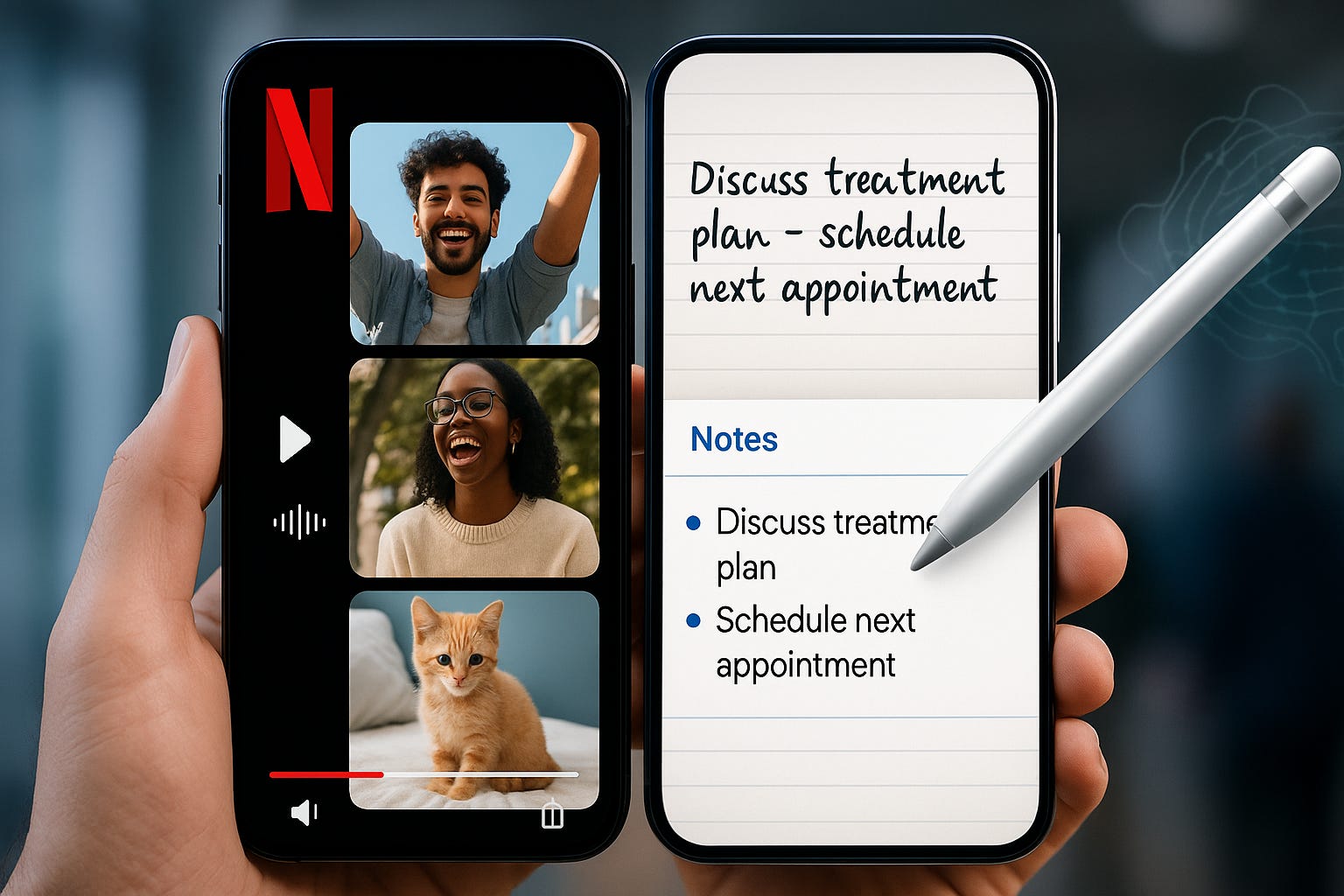
Netflix is testing a new vertical scroll feed on mobile. It’s full-screen, swipe-up, and clearly inspired by TikTok and YouTube Shorts. It’s fast, snacky, and designed for people who open their phones without knowing what they want to watch.
🔗 Here’s the piece from The Verge
Why it matters: This isn’t just a design refresh, it’s a move into new territory. Netflix isn’t just adapting to mobile-first habits, they’re going after entirely new audiences. They've already floated podcasts as a content category, and now they’re testing a TikTok-style feed. That’s not UI polish it is a bid to be part of the creator economy.
Gen Z and Gen Alpha live in short-form. Meanwhile, older generations are warming up to video podcasts as modern-day talk shows. Netflix wants all of it. More views, longer engagement, new kinds of subscribers. This is Netflix meeting the audience where they already are; not in the living room, but in the palm of their hand.
10-Person Teams, $1B Valuations
Business Insider profiled a dozen AI startups that have all hit the billion-dollar mark with teams of 50 or fewer. Safe Superintelligence, Magic, Sakana AI—these companies aren’t outliers. They’re setting the pace.
Why it matters: The idea that big outcomes require big teams is starting to fade. AI is compressing what used to take departments into what a focused team with the right tools can handle. For media and creative industries, this means small groups can go global, fast. If you’ve got a solid idea and a few smart collaborators, that’s enough to make real waves.
At NAB, I said monoliths seemed out of fashion and I think this backs it up. The energy right now is in nimble, weird, brilliant little AI startups. They’re where the next big ideas are bubbling up. The only real question left is who buys who. Or maybe who decides not to sell and starts building an empire of their own.
A Pin That Remembers More Than I Do
Joanna Stern at WSJ spent months wearing AI-powered recording devices. They picked up everything she said, from everyday chats to major meetings, and turned it into searchable transcripts, summaries, and even task lists.
My personal experience: I bought the Plaud NotePin before heading to NAB last month. I wasn’t trying to make a point. I just wanted something to help me track all the conversations that happen in a blur at big events. It turned out to be way more useful than I expected. It helped me recall hallway chats I would’ve missed and flagged follow-ups I forgot I agreed to.
I’ve also used it at a doctor’s appointment. I never remember everything afterward, and the summary notes they hand me are usually light. The NotePin gave me something concrete I could reference later and even have a conversation with. It felt like I finally had backup. And I’m already thinking it will be vital for my daughter starting high school this fall.
Why it matters: These aren’t just gadgets. They’re shifting how we remember and process what we experience. There’s real value here, especially for busy days or important conversations. But it also raises some tough questions about privacy and consent. Still, I’m using it. That probably tells you everything.
So What Does it All Mean?
AI keeps showing up in unexpected places. It’s not just about speeding up tasks. It’s shaping what we notice, what we forget, and what we decide to revisit later. Netflix’s new feed reflects how we scroll and what we pay attention to. Tiny startups are showing us how much can be done with small, tight teams. And yes, I’m walking around with a pin that quietly listens, helping me keep track of life.
The bigger picture? Scale is being redefined. A handful of people can now do what used to take a building full of staff. A single device can hold your memories better than your own head. Discovery is happening in fleeting seconds. Creativity is becoming collaborative in new and unexpected ways. This is what the evolution of AI development should look like.
We used to build things with AI as a tool. Now we’re building with it and in some cases, we’re building inside it.