

Hollywood blames AI for killing creativity. Tech executives blame AI for mass layoffs. Manufacturing blames AI for job losses. But here is the truth: AI isn’t making these decisions—people are.
AI isn’t a rogue villain stalking industries and taking jobs. It is a tool, like any other, and how it is wielded depends entirely on the people in charge. Across industries, leaders are choosing to use AI not to empower workers and creativity but as a cost-cutting weapon.
If jobs are disappearing, it is not because AI woke up one day and decided to take over. It’s because too many executives, chasing quarterly profits and not looking value, are prioritizing efficiency over humanity. And nowhere is this more evident than in media and creative industries, where storytelling and innovation are under direct threat. In the end, AI is not a creative engine, it is a toolset to make creative people more effective. The entertainment industry should embrace it where it makes sense but not eviscerate the talent pool at the cost of the vision of the people that make it great.
This Isn’t Just a Media Problem—It is Everywhere
AI is hitting every industry, and the patterns are disturbingly similar. Leaders are using the technology to displace workers, not enhance them.
Tech: In 2024 and 2025, companies like Meta, Microsoft, and Google laid off tens of thousands of employees, often while touting massive investments in AI. They did not need to fire those people—AI was not forcing their hand. They chose to cut headcount and blame it on “optimization.” AI became the excuse for decisions made to appease Wall Street .
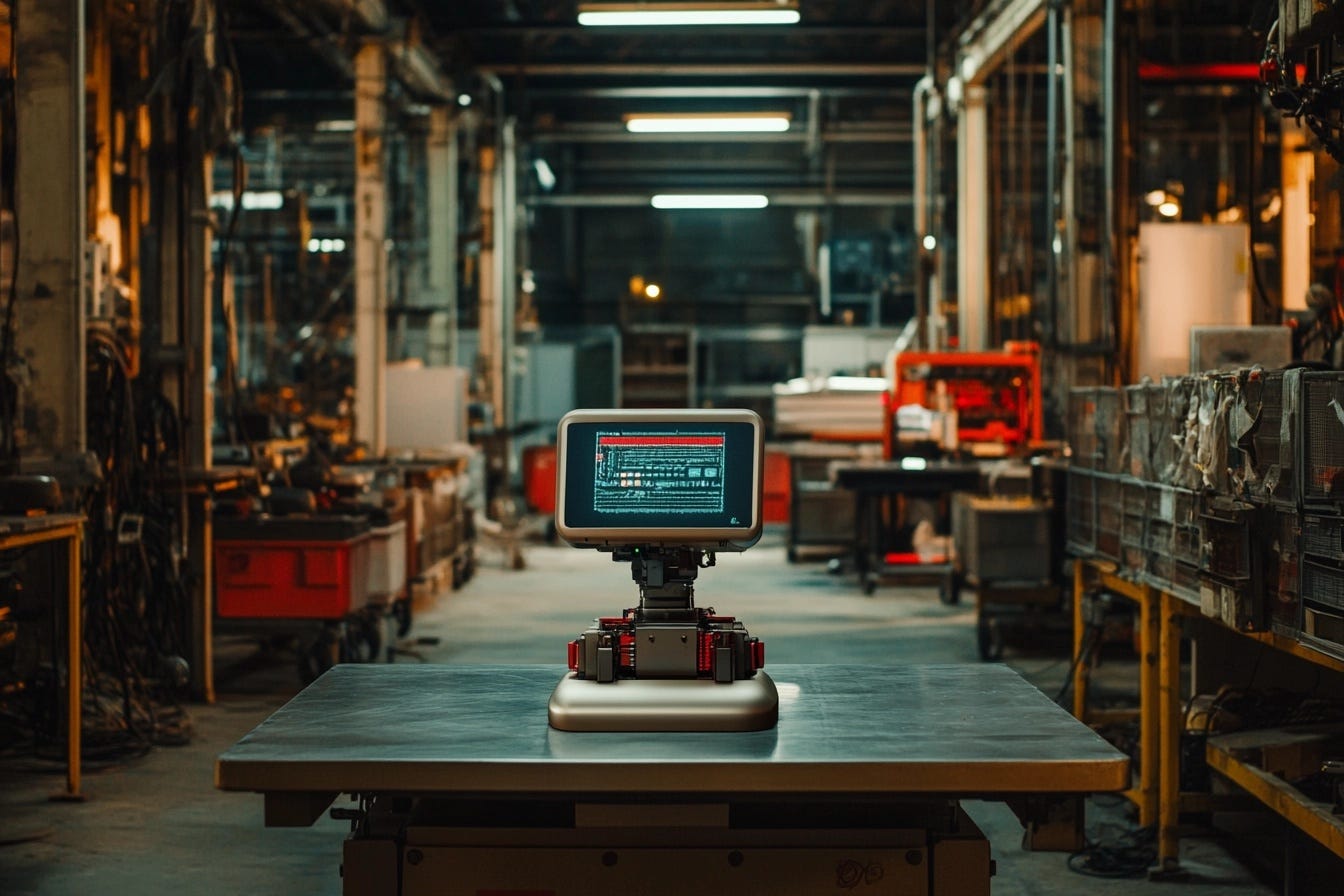
Manufacturing: AI-driven robotics have transformed assembly lines, with incredible potential to reduce workplace injuries and improve efficiency. But instead of retraining and redeploying skilled workers, companies often choose to eliminate jobs entirely. It’s not about what the technology can do—it is about what leaders decide to prioritize .
Healthcare: In hospitals, AI could revolutionize patient care by assisting with diagnostics, streamlining billing, and improving workflows. Instead, many healthcare systems are using it as an excuse to reduce staffing, leaving fewer nurses and doctors to do more with less. Patients do not get better care; they get a thinner safety net .
Each of these industries faces unique challenges, but the pattern is clear: the problem isn’t AI—it is the people making decisions about how it is used.
The Media Industry Isn’t Immune—AI Exposes Old Weaknesses
In media and entertainment, AI has the potential to transform workflows and amplify creativity. But instead of embracing this opportunity, many studios and production companies are using AI to justify slashing budgets and thinning out teams.
Take post-production. AI-driven tools like rotoscoping, dubbing, and color correction could eliminate tedious tasks, freeing editors and VFX artists to focus on creative innovation. But instead of seeing this as an opportunity to elevate storytelling, studios are treating it as a way to shrink departments and cut costs .
The recent Writers Guild of America (WGA) strike highlighted the industry’s growing reliance on AI to churn out content faster and cheaper. Technology did not decide that writers are expendable—studio executives did. AI isn’t replacing people; people are replacing people .
What AI Could Be in Media—If We Let It
Imagine a media industry where AI does not replace creativity but enhances it:
Pre-Production: AI tools streamline storyboarding, location scouting, and script revisions, leaving writers and directors free to refine their vision.
Production: AI optimizes scheduling, lighting setups, and even on-set logistics, giving crews more flexibility to experiment and innovate.
Post-Production: AI automates repetitive tasks like rotoscoping and initial color grading, allowing editors and artists to focus on the creative, high-impact work.
Global Distribution: AI enables smarter localization of content, delivering culturally nuanced translations without replacing the local creatives who understand their audiences best.
These tools exist today. But they are not being used to empower creatives—they are being used to cut corners. That’s not an AI problem. It’s a leadership problem .
AI Bridging the Accessibility Gap
Not every use of AI threatens jobs. In some cases, it fills critical gaps where human resources fall short. Today, there’s more content being created than there are interpreters, voice actors, or announcers to make it accessible to global audiences. Live events and regional programming often go untranslated or are only captioned for the highest-value markets, leaving vast swaths of audiences underserved.
This is where AI becomes a tool of inclusion. Real-time captioning, dubbing, and translation tools don’t reduce jobs, they make it possible for more people to experience and share in stories that might otherwise remain inaccessible. AI fills this “caption gap,” enabling smaller creators to reach global audiences and allowing regional stories to cross borders without the prohibitive cost of human localization. Legacy content that has been hidden away for decades can be brought back to its audience with tools that make it consistent with today’s formats and needs.
Instead of limiting access, AI expands it, leveling the playing field and making the media landscape more inclusive.
These tools exist today. But they’re not being used to empower creators and audiences, they’re being used to cut corners. That’s not an AI problem. It’s a leadership problem.
The Wrong Mindset Is Killing Creativity
Here is the real tragedy: the media industry is supposed to be the beating heart of storytelling and culture. Instead, many leaders are too focused on squeezing every last dollar to see the forest for the trees.
This obsession with “efficiency” does not just hurt workers—it hurts creativity. It flattens the stories being told, narrows the voices that emerge, and stifles the risks that lead to true innovation.
If the people running these companies cannot see AI as a way to enhance their teams rather than replace them, the creative industries will lose what makes them special: the people who bring stories to life.
This Isn’t Just Media’s Problem—It is Everyone’s
What is happening in media is a cautionary tale for every industry. AI has the potential to democratize opportunity—to help filmmakers on indie budgets produce Hollywood-quality visuals or enable small businesses to compete with giants. It could revolutionize healthcare, education, and manufacturing.
But it will not happen on its own. If we let bad leaders dictate how AI is used, it will become a tool of marginalization, not empowerment.
Blame the Decisions, Not the Tool
AI isn’t going away. The only question is, what kind of AI are we going to have? One that empowers workers and amplifies creativity, or one that replaces people to cut costs?
This isn’t a call to fear AI—it’s a call to take responsibility. The future of AI will be shaped by the choices we make today. Let us demand better from the companies deploying this technology. Let us advocate for policies that encourage AI to enhance human potential, not displace it.
Because at the end of the day, AI does not make decisions—people do. And it is time we started holding those people accountable.
Call to Action
Educate yourself. Call out bad practices. Advocate for ethical AI standards in your industry. AI can be a force for good, but only if we demand it. Let us stop blaming the tool and start taking control of the narrative.
While I agree that fundamentally it is people cutting people out of jobs, not the AI itself, there is a basic mistake in your examples. In the Motion Picture industry for example you mention automating rotoscoping , etc. to give the editors and directors more creativity to concentrate on. But that automating IS cancelling jobs for hundreds of VFX workers who do just that - rotoscope, re-lighting, match moves, color grading, etc. In production on the set floor automating lighting setups isn't giving anyone time in production for experimenting. That is not a mindset in production that costs $$$ per hour. In pre-production by having AI do storyboarding that eliminates the positions of the artists who do that work by hand. And that is just scratching the surface. Yes, it is a business so the producers / studios are always looking for ways to cut costs and satisfy the stock holders of those corporations that have them. But if you look at the recent innovations in AI, specifically with Veo2 (and others), one individual can create and finish an entire :30 TV commercial that would need multiple crews, locations, equipment and studio spaces and travel by themselves with a relatively medium size computer at home in a few weeks. I believe that there will be a catastrophic collapse of the advertising production industry in the next few years, if not sooner. The quality and flexibility in these AI created spots are already here now, just waiting to put many production people and equipment out to pasture.