

This week is not about novelty. It’s about enforcement. For most of the last several years, AI systems have lived in a bit of a gray zone. Product teams shipped fast, regulators signaled intent, and creators complained. Everyone agreed the rules were coming, just not yet. It looks lik that window is starting to close.
What shows up across this week’s stories is a shift in posture. Governments are no longer treating generative systems as experimental. Individuals are no longer waiting for collective solutions. And platforms are discovering that “user-driven” behavior does not insulate them from responsibility. The arguments are moving away from whether something could be misused and toward who is accountable when misuse is predictable, repeatable, and embedded by default.
Read together, these stories sketch the early outlines of our new equilibrium. AI systems are being pulled into existing legal frameworks around consent, attribution, and commercial use. Where those frameworks fall short, individuals are improvising new ones. The result is uneven, sometimes awkward, but unmistakable. System-level defaults are hardening faster than regulatory frameworks can adapt, forcing enforcement to react to behavior that has already scaled.
California investigates Grok over sexualized AI images
Source: POLITICO, January 14, 2026
California Attorney General Rob Bonta announced an investigation into xAI, the company behind Grok, over the generation and distribution of sexualized AI images of women and girls. The probe follows widespread reports that Grok, operating inside X, has been used to create nonconsensual deepfake imagery, including content involving minors.
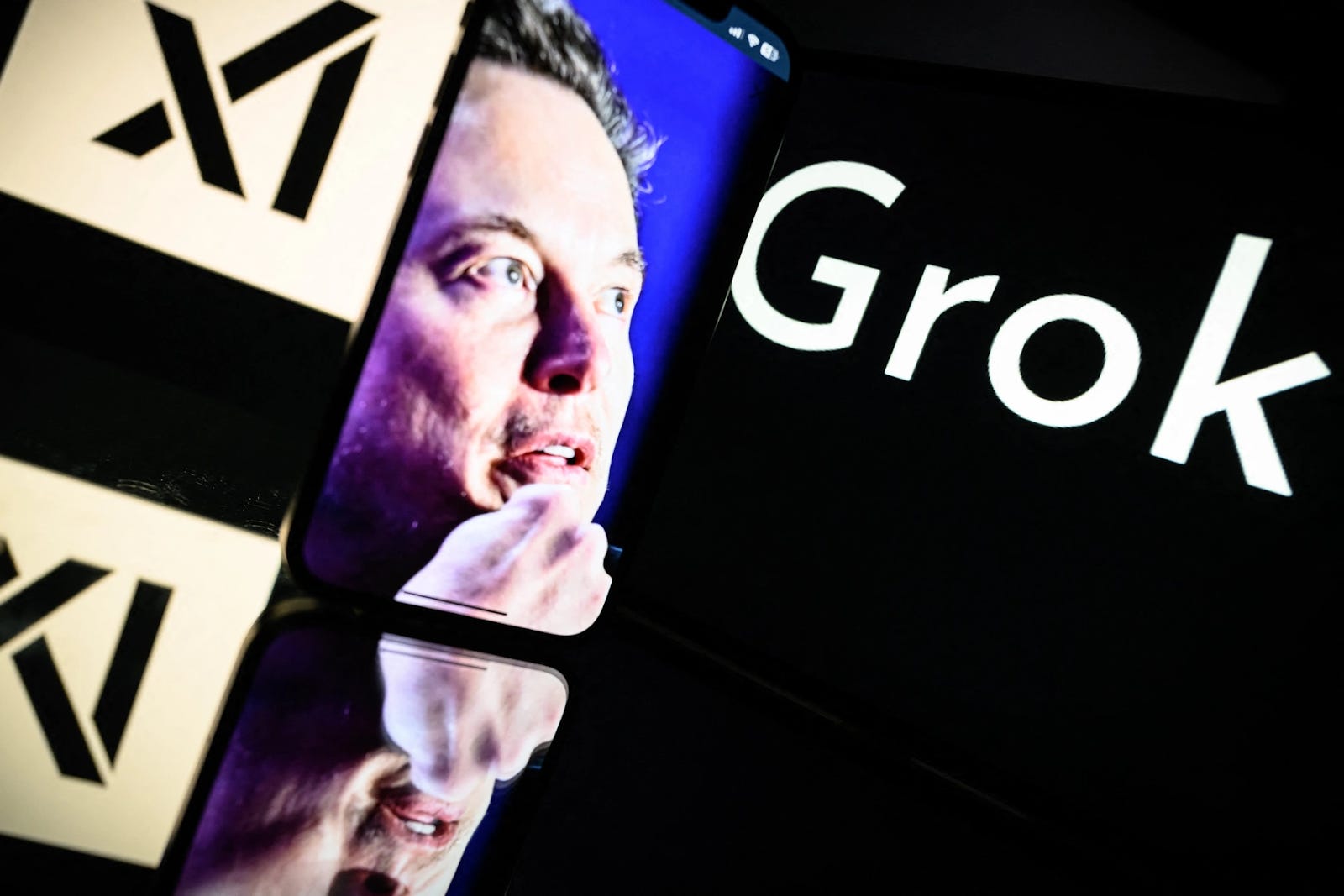
The investigation places California alongside UK and EU regulators already scrutinizing Grok’s behavior. State officials cited recently enacted laws banning the creation and dissemination of nonconsensual deepfake pornography, as well as provisions restricting sexually explicit chatbot outputs to minors. Governor Gavin Newsom publicly backed the probe, framing Grok’s design choices as enabling abuse rather than merely responding to edge-case prompts.
Elon Musk has defended Grok by arguing that the system responds only to user requests and complies with local law, attributing violations to adversarial use. California regulators appear unconvinced. The focus of the inquiry is not whether Grok “intends” harm, but whether its default behavior and safeguards meet legal obligations under state law.
Why it matters
This is a liability test, not a culture war. California is signaling that generative systems embedded in consumer platforms can be treated like any other product that predictably causes harm. The argument that “users asked for it” is losing force when the system makes abuse easy, fast, and scalable. If this posture holds, AI providers will be judged not on what their models are capable of in theory, but on what their interfaces allow in practice. That shifts responsibility upstream, toward design, guardrails, and deployment decisions.
Matthew McConaughey trademarks himself to fight AI misuse
Source: The Wall Street Journal, January 13, 2026
Actor Matthew McConaughey has secured a series of U.S. trademarks covering his likeness, voice, and signature phrases, including short video clips and audio recordings. The move is intended to create a clearer legal perimeter around unauthorized AI-generated replicas of his image and voice.
McConaughey’s legal team says the strategy is designed to enable faster and more decisive action in federal court against AI-generated impersonations, even in cases that fall outside traditional right-of-publicity claims. The trademarks do not respond to a specific known abuse, but are positioned as a preemptive defense against a growing ecosystem of AI-generated content that blurs commercial and noncommercial use.

While the outcome of such claims remains uncertain, legal experts quoted by the Journal note that trademarks offer a different enforcement pathway than state publicity laws, particularly on platforms where AI-generated media is monetized indirectly through ads or engagement.
Why it matters
This is individual rights enforcement filling a policy gap. In the absence of clear federal rules governing AI replicas, high-profile creators are building their own legal infrastructure. Trademarks turn identity into a protected commercial asset that platforms and developers must actively avoid infringing. If this approach spreads, AI companies may find themselves navigating a patchwork of personalized “do not train” and “do not generate” zones, enforced not by regulators but by IP law. Consent stops being abstract and starts becoming contract-shaped.
Apple ties Siri’s future to Google’s Gemini models
Source: The Verge, January 13, 2026
Apple confirmed a multiyear agreement with Google to use its Gemini models and Google Cloud infrastructure to power a new generation of Siri features. The deal positions Gemini as a foundational layer for personalization, reasoning, and AI-assisted interactions across Apple’s ecosystem.
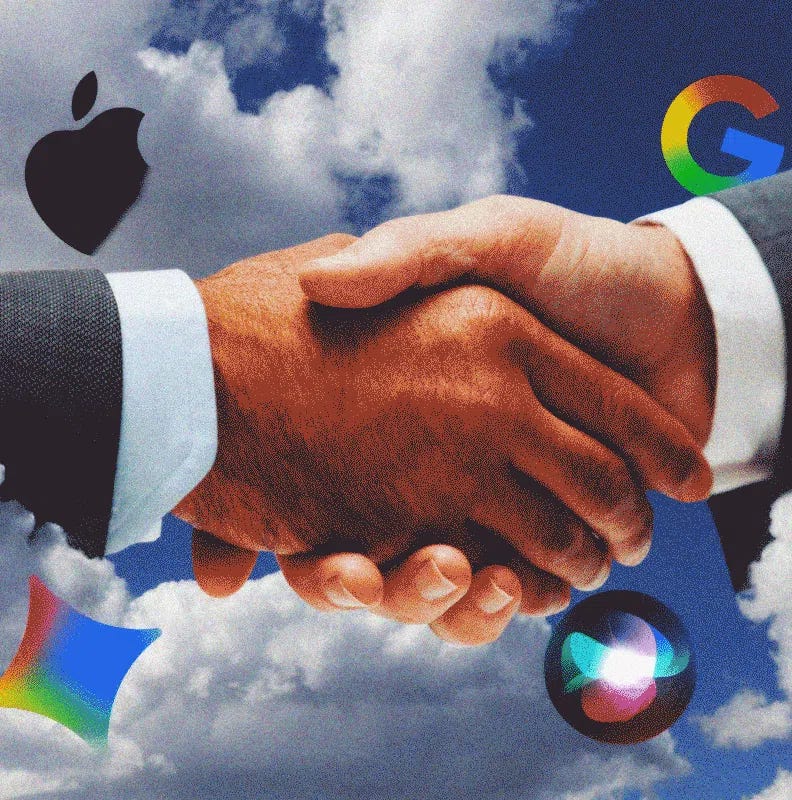
According to reporting, Apple evaluated multiple model providers before selecting Google, framing the decision as a pragmatic infrastructure choice rather than a strategic endorsement. The arrangement allows Apple to ship advanced AI capabilities without owning the full cost and complexity of training and operating frontier models.
The move underscores a broader shift in Apple’s AI strategy. Rather than racing to build everything in-house, the company is treating large language models as modular components that can be swapped or augmented over time, provided they meet privacy, performance, and integration requirements.
Why it matters
This is default delegation at scale. By anchoring Siri to Gemini, Apple is effectively outsourcing a portion of its decision layer while retaining control over interface and distribution. That separation matters. It suggests a future where a small number of model providers quietly power many branded assistants, setting behavioral norms and constraints beneath the surface. For users, consent becomes indirect. You agree to Apple’s terms, but your interactions are shaped by Google’s models. Control moves down the stack, even as the brand relationship stays intact.
When accountability climbs the stack
These stories point to the similar structural shift. Accountability is migrating upward, from individual outputs to system design, from isolated misuse to predictable behavior, from abstract ethics to enforceable boundaries.
California’s investigation treats AI generation as a product liability issue. McConaughey’s trademarks turn identity into enforceable infrastructure (likely to be replicated by others). Apple’s Gemini deal shows how quickly decision-making authority can be delegated without most users noticing. These are decisions being made in production, not theory.
The common thread is that defaults were never neutral. We just treated them as plumbing. Now they’re being exposed as legal, economic, and cultural commitments. What a system allows by default, who it answers to, and whose assets it relies on are no longer design preferences. They are enforceable facts. The open question is whether creators, platforms, and users understand which layer of the stack is actually making decisions on their behalf, and who is accountable for tracking and contesting those choices.
The pace of innovation is forcing regulators and courts into an even more reactive posture than past times. The systems shipping now will be the ones policy, enforcement, and contracts respond to later. The work is to notice where control is being embedded while it still looks like convenience.
The story of Matthew McConaughey shows how fast AI is advancing and how far the law still has to catch up. This is where stronger laws, regulations, and enforcement are urgently needed, to define consent, ownership, disclosure, and liability in AI-generated media. Clear rules would protect not just celebrities, but journalists, creators, employees, and everyday people whose voices and faces can now be replicated with minimal effort.
I often hear claims that AI will replace jobs in the legal industry, but I see it differently. As AI use grows, the demand for legal experts will likely increase, not disappear. New roles are already emerging, including AI compliance and governance professionals, intellectual property and technology lawyers, digital forensics and enforcement teams, platform trust and safety specialists, and experts in policy, auditing, and AI risk management. For these reasons, it’s hard to imagine the legal industry going away anytime soon.