

Thank You, and a Question
First, a heartfelt thank you. Over the past several weeks, as I’ve felt my way through a non-Microsoft life, the conversations I’ve had here, Linkedin, and in person have been refreshing. They’ve reminded me of the parts of this industry I fell in love with when I was just getting started —the idea that anything is possible. While I have no immediate plans to jump back in, I’m starting to see the places where I want to spend my time.
And one of those places is right here.
So, I have a real question for you: - Would you pay for my thoughts?
I’ve resisted turning on subscriptions, but I’ve had several very generous offers made. If I were to continue writing in the same vein as the past month—deep dives into media, technology, and the attention economy—would people be willing to support that? I’m not asking you to subscribe today, but I am asking for your honest take. If this is worth something to you, let me know. Because I’m starting to think it might be worth something to me too.
Now, with that out of the way, let’s dive into my personal manifesto about the media industry and where it is going.
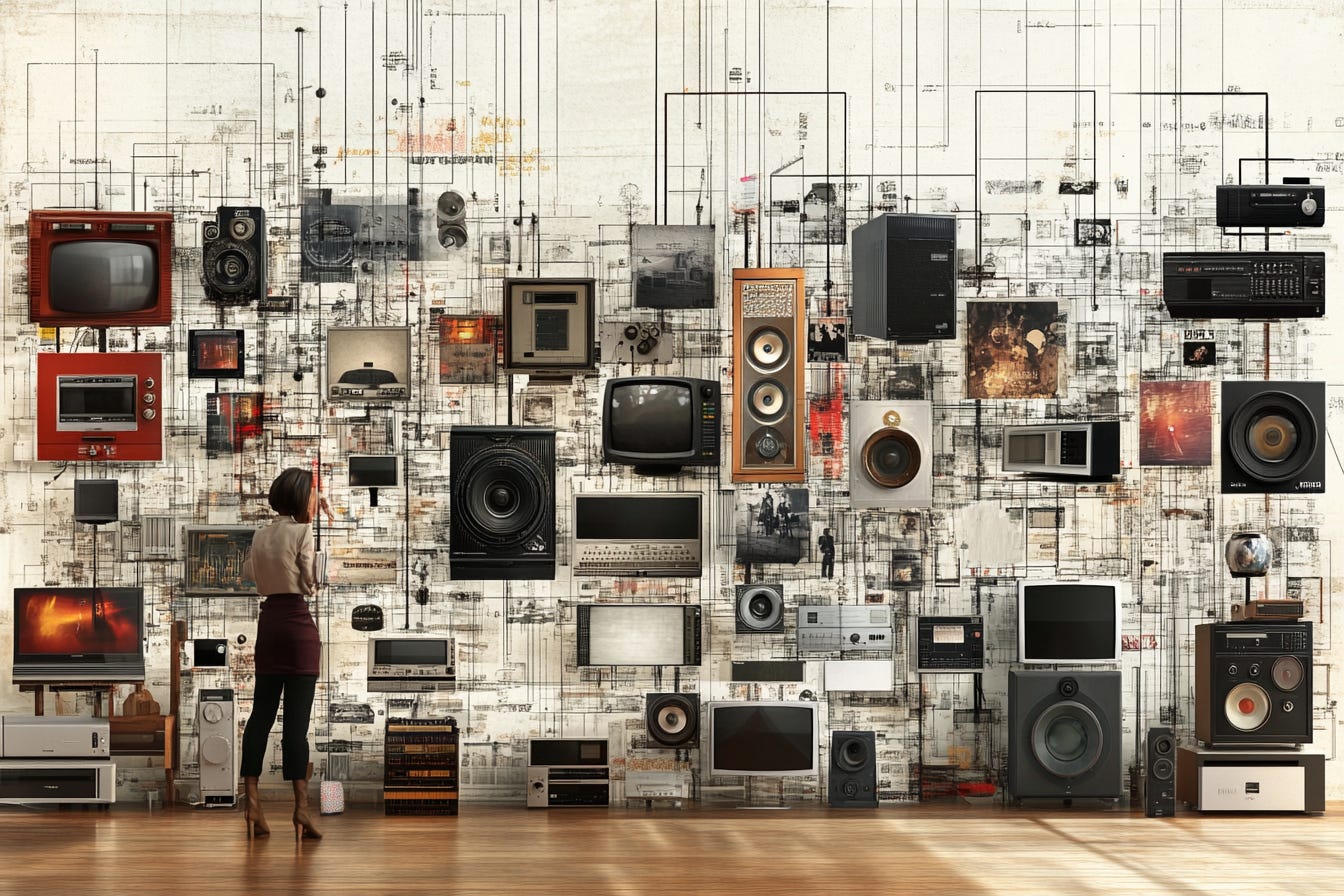
Why a Manifesto?
A manifesto isn’t just a collection of opinions. It’s a statement of purpose, a way to stake a claim in the future—to set out guiding principles for what matters, what should be protected, and what should be challenged.
The media industry is at a turning point. AI, shifting business models, and changing audience behaviors are forcing every creator, distributor, and consumer to rethink their relationship with content.
This isn’t just about predicting the future of media, it’s about defining it.
And so that is why I’m putting this down. Not just to document where I believe media is headed, but to ask the critical questions about where it should go—and how we get there.
The End of an Era, the Birth of the Next
Media is never static. It is an evolving conversation between technology, culture, and the human need for storytelling. Each new medium, from the printing press to AI-driven content, disrupts what came before. And yet, in all the noise of change, one truth remains: media is about attention—how we earn it, shape it, and sustain it.
The old monoculture of radio and broadcast TV has splintered. We now live in an era of hyper-personalized feeds, algorithmic storytelling, and AI-generated content. But while technology changes, our fundamental relationship with media remains deeply human. This manifesto is a call to rethink how we engage with media, not as passive consumers but as active participants in shaping its future.
Media is No Longer a Broadcast—It’s an Ecosystem
Once, media was a one-way transmission: newspaper to reader, TV to audience, studio to theater. Now, we live in an age of participatory media, where audience engagement is as valuable as the content itself. The shift from passive consumption to interactive engagement is the defining trait of modern media.
AI is not just a tool for automation but an augmentation of storytelling, offering new ways to create and shape narratives.
The “lean-back” experience of traditional media is merging with “lean-in” interactivity. AI-driven archives, liveops features, and gamified engagement show that audiences are more than just watchers—they are navigators of content.
The future belongs to platforms that understand media as an ecosystem, not a monologue.
The Collapse of Monoculture and the Rise of Micro-Attention
For most of the 20th century, media was dominated by monoculture—broadcast networks, national newspapers, Hollywood studios. These institutions manufactured a shared reality. Today, that has shattered into a mosaic of niche communities, personalized feeds, and fragmented micro-audiences.
The decline of cable and rise of streaming has not just unbundled content but unbundled culture itself.
AI recommendation engines and algorithmic feeds have replaced network programming schedules. The new gatekeepers are not executives but data models predicting what we want to see next.
TikTok, YouTube, and AI-generated media signal that the future is not in mass distribution but in hyper-individualized media experiences.
We no longer live in a world where everyone watches the same thing at the same time. The challenge for creators and platforms is no longer about reaching the most people but about creating the most meaningful engagement within their niches.
The Attention Economy is Broken—But It Can Be Rebuilt
Media today is largely optimized for addiction, not enrichment. The infinite scroll, autoplay algorithms, and AI-generated clickbait are all designed to keep us engaged, but at what cost? We risk valuing engagement metrics over storytelling, virality over depth.
But this is not an inevitability—it’s a design choice. We can build an attention economy that prioritizes:
Quality over quantity: AI can help resurface long-form content and historical archives instead of just accelerating disposable media.
Intentional discovery: Instead of optimizing for time spent, platforms can optimize for value received—curation that helps audiences get what they need rather than what keeps them hooked.
Meaningful interaction: AI-powered media doesn’t have to be isolating. Used well, it can enhance shared experiences—collaborative storytelling, interactive narratives, and deeper engagement rather than passive consumption.
The media industry must decide: Are we architects of engagement or engineers of addiction?
We Haven’t Solved Discoverability—And We’ve Broken Viewing Management
The paradox of today’s media landscape is that we have more content than ever before—but it’s harder than ever to find what we actually want to watch.
AI recommendations are not true discovery. They prioritize engagement over diversity, often reinforcing what users already consume instead of surfacing unexpected gems.
Fragmentation across services has made it nearly impossible to track what’s available where, turning what should be a seamless experience into a frustrating scavenger hunt.
Subscription fatigue is real. Viewers juggle multiple platforms but struggle to manage what to keep, what to cancel, and when to resubscribe.
The next major breakthrough in media won’t be another content platform—it will be a solution that helps audiences manage their viewing, consolidate discovery, and take back control of their entertainment choices.
The Death of Ownership: We No Longer Own Our Media—And That’s a Problem
As streaming and cloud-based platforms have taken over, we’ve quietly given up ownership of our media libraries. The days of DVDs, Blu-rays, and even downloaded MP3s are fading, replaced by subscription models that can revoke access at any time.
What happens when a studio pulls a show from a streaming platform and it no longer exists anywhere?
Digital media storefronts are shutting down, erasing libraries people thought they owned.
The shift to AI-generated and ephemeral content means that more media is being created than ever, but less of it is being preserved.
Does this matter? And if so, what can we do to take back control of the media we care about?
AI-Generated Media and the End of the Water Cooler Moment
Once upon a time, TV and movies created shared cultural experiences. Whether it was the final episode of MASH*, the Game of Thrones finale, or The Sopranos’ controversial cut to black, media had the power to bring people together.
But now:
The algorithmic feed ensures no two people see the same thing.
AI-generated content can be hyper-personalized, meaning two viewers could get entirely different versions of the same story.
The speed of content creation makes nothing feel permanent—a viral TikTok today is forgotten tomorrow.
If media is becoming hyper-individualized, does that mean we’ve lost the shared narrative experience that once connected us?
The Blur Between Reality and Fiction: AI, Deepfakes, and the War on Truth
Generative AI is making it increasingly difficult to distinguish what’s real from what’s synthetic.
AI-generated influencers, fake historical footage, and deepfake political speeches are reshaping trust in media.
The cost of misinformation is lower than ever—anyone can manufacture a fake news clip, a fabricated scandal, or a historical event that never happened.
Social media algorithms prioritize outrage over accuracy, making the spread of AI-generated misinformation a feature, not a bug.
How do we navigate a world where seeing is no longer believing?
A Call to Action
We are no longer just consumers of media. We are all media creators now.
The past was about centralization—few companies controlling distribution, a handful of networks deciding what we watched, and a select group of critics telling us what was worth our time. The future, however, is something entirely different: participation, personalization, and rediscovery.
But the question remains: What kind of media future do we want to build?
Do we want a world where AI-generated content floods our feeds with shallow, engagement-driven media, or one where AI is a tool that amplifies human creativity?
Will media remain something we rent access to, subject to corporate takedowns and algorithmic whims, or will we reclaim ownership of the stories that shape us?
Can we reintroduce true discovery into our media experience, breaking free from recommendation engines that reinforce sameness?
How do we restore trust in media when misinformation can be generated in seconds and seeing is no longer believing?
Do we want media to remain passive consumption, or will we demand interactive, immersive, and meaningful engagement?
Will storytelling remain a shared cultural experience, or are we heading into an era of hyper-personalized, isolated consumption?
The answers to these questions won’t be dictated solely by studios, tech companies, or AI developers. They will be determined by us—by how we choose to engage, what we choose to support, and the ways we demand better.
The only way to shape the future is to participate in how it evolves.
Support platforms that value creative expression over algorithmic manipulation.
Push for innovation that enhances human creativity rather than replacing it.
Be intentional with what media you consume, how you discover it, and where you invest your time.
Demand better transparency in AI-generated content and media ownership.
Encourage tools and ecosystems that foster collaborative storytelling, meaningful discovery, and deeper engagement.
This is not just a moment of transition—it is a moment of decision. The future of media is being written right now.
The question is - Will we shape it, or will we let it shape us?