

This essay got started in a bar with a cocktail in hand—a fitting setting for a reflection on creativity, experimentation, and the joy of crafting something unique. Sitting in Key’s Lounge, I tried to recapture when the idea of Potionotics first sparked. It’s a project that never left the brainstorming phase, but one that helped shape my perspective on creativity and the challenges of turning an idea into reality.
When we moved to Portland in 2009, my interest in cocktails and spirits transformed into a full-blown passion, fueled by the city's love of happy hours and its thriving craft scene. With Potionotics, I wanted to explore how the flavors I loved in cooking could find new life in cocktails—bitters inspired by pho, syrups with the complexity of black pepper, even mixers that hinted at tom yum soup. It was an ambitious idea with a clever name, borrowed from a friend’s childhood.
But like so many creative ventures, life intervened. New parenthood, work commitments, and the realization of how much effort it would take to bring Potionotics to market eventually pushed the project to the back burner. And yet, I don’t see it as a failure. The experiments, the collaborations, and the lessons learned from dreaming up this concept were deeply fulfilling—and that’s what matters most.
Now, with so many brilliant syrups, bitters, and mixers available, it feels like the world has caught up to the spirit of Potionotics. While I doubt I’ll ever revisit the idea as a business, it remains a fun reminder of what drives creativity: the joy of exploration, the delight in flavor, and the connections formed over a well-crafted drink.
Here’s to the ideas that keep us curious, even if they never leave the notebook!
Originally posted on Medium in February of 2019:
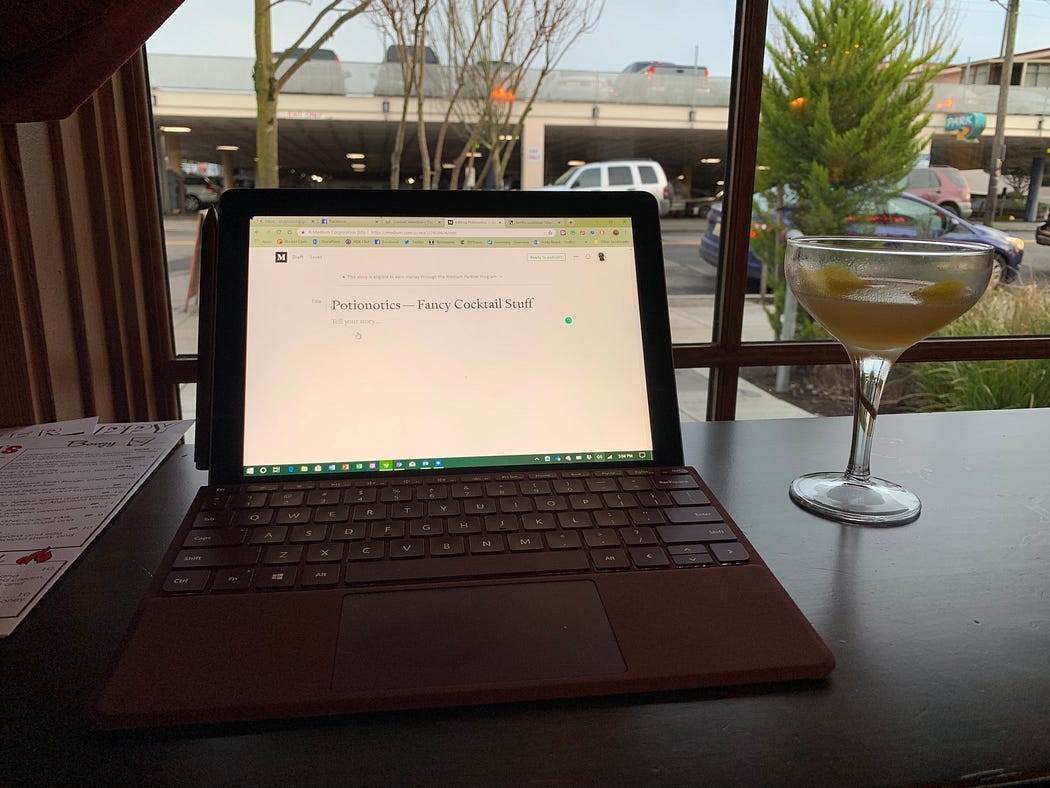
I have a rare weekend night alone — Lisa is out at a crafting event with a friend and the friend’s daughter is watching Davy. And so I find myself without plans and decided to use this for some writing time. And I happen to be doing it in Key’s Lounge, the bar nearest to my house, and the kind of place that makes me wish we still went out to bars a lot to hang out. The whole place is reminiscent of your parents’ basement, circa the early 80s — the drinks are strong, the food is good, and there are plenty of corners I can tuck myself into to write without feeling like I’m taking up too much space.
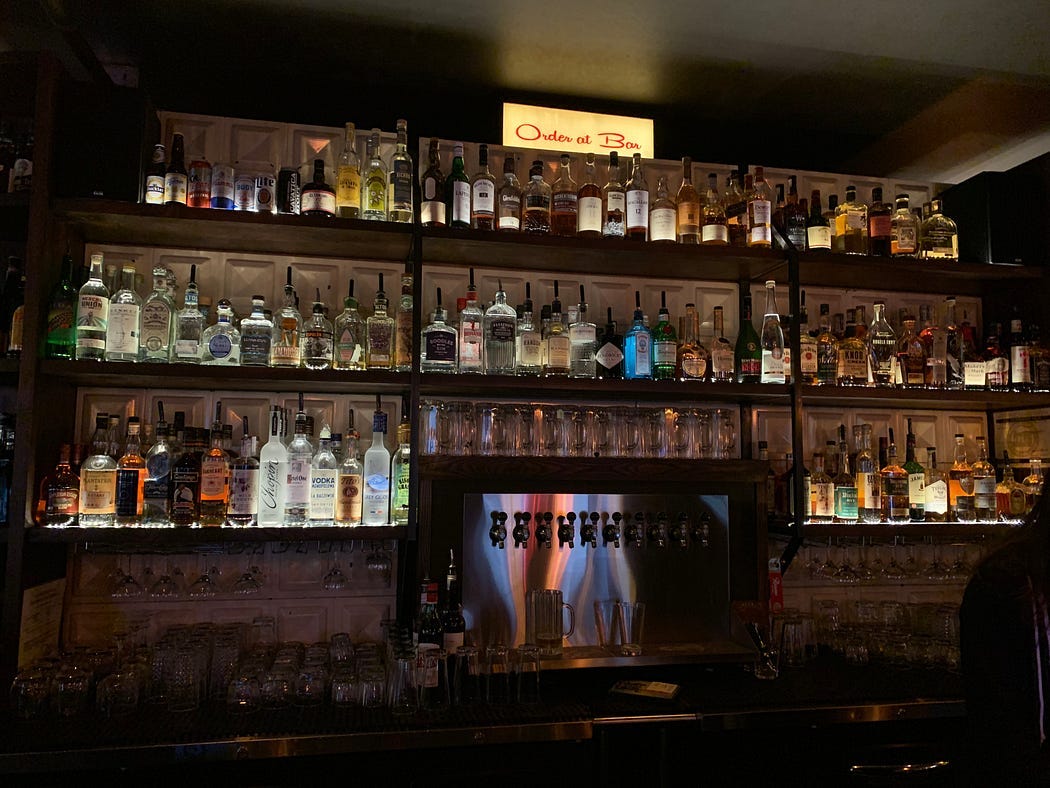
Somehow it seemed appropriate to talk about Potionotics since I’m sitting in a bar writing and drinking (for the record I started with the Wicked Daquiri, served up, but am considering a Harvest Moon next, which is sort of an old fashioned with a bit of cinnamon to make it autumnal).
When we moved to Portland in 2009, I was already big into cocktails and spirits. But being here then, ramped that up dramatically. Portland is a town that runs on Happy Hours. It also already had some amazing distilleries, but so many more have grown up here in the past 10 years. And being into food-related ideas, as you may have noticed, I immediately started trying to come up with cocktail related products — tonics, syrups, bitters, and other things so that cocktail lovers could recreate those epic drinks from the bar at home. And I thought I had a fairly clever hook. I didn’t really want to play around with specific traditional cocktails. Instead, I wanted to find ways to infuse the savory flavors from my love of cooking into cocktails. I know this sounds weird, but bear with me, we’ll get to some of the ideas. First, I wanted to come up with a name that matched the uniqueness of the ideas I was coming up with. Enter my friend, Adam Rosenberg.
Adam and his buzzgak, Erica (buzzgak is their word for a life partner, which is what they are to each other) had been our friends when we lived in Brooklyn (Lisa and Erica were college friends and fortunately, both Adam and I found each other not only tolerable but quite amusing) and visited us several times over Christmas once we moved to Portland. On one of those trips, I was telling Adam was reminding me about a childhood game his brother and he would play that involved mixing ridiculous concoctions together in his garage with his brother. It was random concoctions of soapy and very dangerous chemicals (this was the 70’s, different times!) that kids no doubt shouldn’t have been allowed to brew up.
They called this game Potionotics, as it sounded like a mixture of science and magic. Adam knew some of the random ideas I was playing with and I asked him if I could borrow the name Potionotics to describe them. He chuckled and obliged my nonsense. Armed with a catchy name, I started trying to figure out different categories and specific products I wanted to include in my cocktail startup.
Potionotics Categories
Right out of the gate, I was thinking of simple syrups that could add both flavor and sweetness to cocktails, but I wanted to do more. Mixers also came to mind, I had grown up seeing those big margarita mixers in the grocery store and I thought I could do better. The final idea I’d had for a product was bitters, something I’ll admit I knew very little about when I started other than you put some in lots of cocktails. Pleased with three different product areas, I started experimenting with flavors (oh and doing tons of internet research about the history of bitters).
Bitters
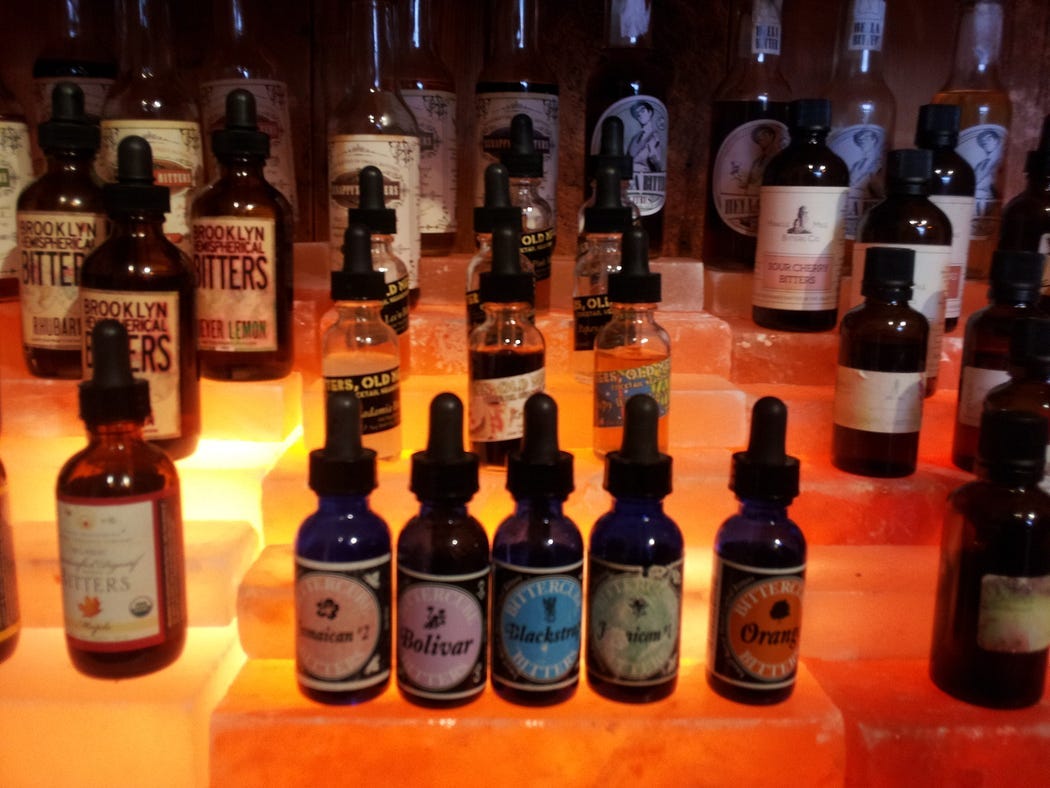
I started with Bitters, in part because I sort of became fascinated with the research into them. The best definition of bitters that I have come across is that they are the salt and pepper of the cocktail world. They’re the spice that when added, makes the whole thing better, but it is a thing that you couldn’t necessarily pick out on its own. What really was interesting to me was how bitters are an intense infusion of aromatics from both a neutral spirit and water (done separately, then blended) to extract different flavors (certain flavors are on water-soluble, whereas some are soluble through alcohol). Traditional bitters were very herbal (think Peychaud’s), and most recently there was a trend of citrus and specific spice flavor showing up (cardamom bitters is particularly delicious). My idea was to take the essential flavors of some of my favorite meals and turn them into bitters. For example, the flavors that makeup Pho — cinnamon, clove, garlic, coriander, etc. I added these spices along with the more traditional bittering agents (wormwood, orris root, dandelion root, cinchona bark, etc). It took a few rounds of experimenting, but I ultimately came up with bitters that I was quite happy with. And when you added it to a cocktail that included cilantro and a little sriracha, it did remind me of the taste of a good bowl of pho (now in cocktail form!)
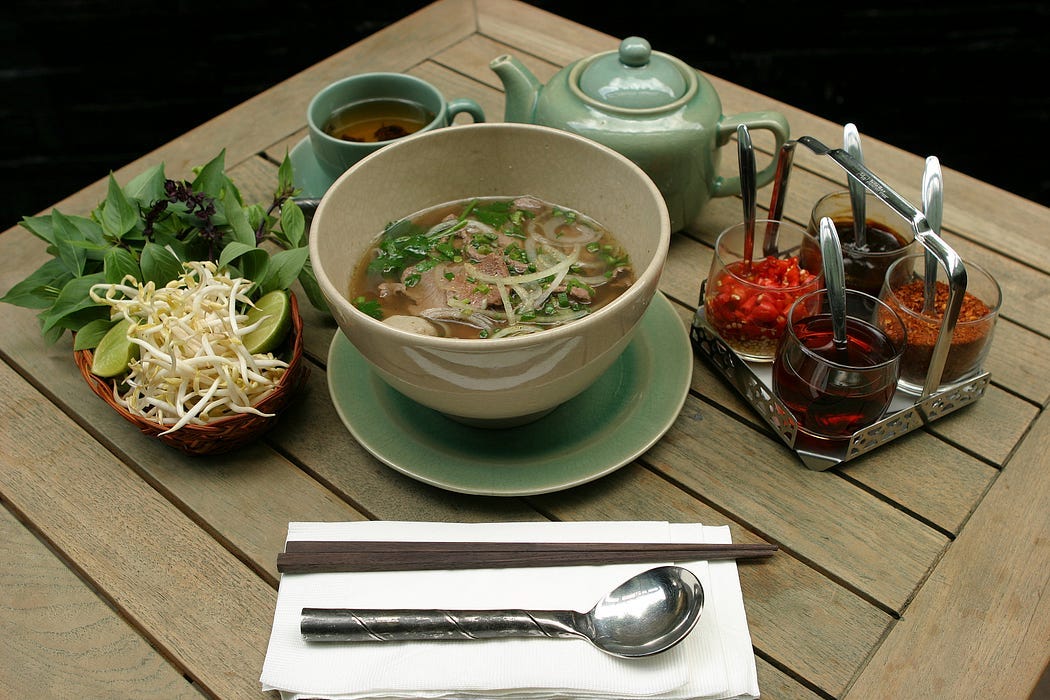
Pho was by far my most favorite flavor, but I did play with others — Spanish paella (saffron, piquillo peppers, lemon, tomato, thyme) and Thai curry (Thai chilies, kaffir lime, curry leaf, ginger, galangal) were also very tasty. I really wanted something akin to the flavors of a bowl of borscht (Beets, coriander, dill, apple cider vinegar, celery), but I never could quite figure it out. In retrospect, I think my issue was I was using raw beets, which have a lot of sugars. Had I cooked down the beets, or maybe reduced beet juice, then maybe the cooked sugars would have improved the quality of what I was creating. Ah well.
Syrups
Simple syrups were another popular way of injecting flavor into a cocktail. Unlike my bitters, I did believe syrups should be fairly straight forward. But I did like the idea of intensely savory flavors combined with the sugar. Rosemary, Thyme, Cardamon, Black Pepper — I must have made a hundred different simple syrups with every flavor on my spice rack just to see what worked. This process taught me that the sugar you use is as important as the flavoring agent. White, refined sugar tended to just make everything incredibly sweet and you needed to use lots and lots of the spice or herb to try and counteract that. Brown sugars added a much more complex earthy flavor and were often less sweet tasting. I also found that adding a touch of citrus (usually lemon juice or even some ground lemon peel) would enhance the flavor without making it overtly citrus.
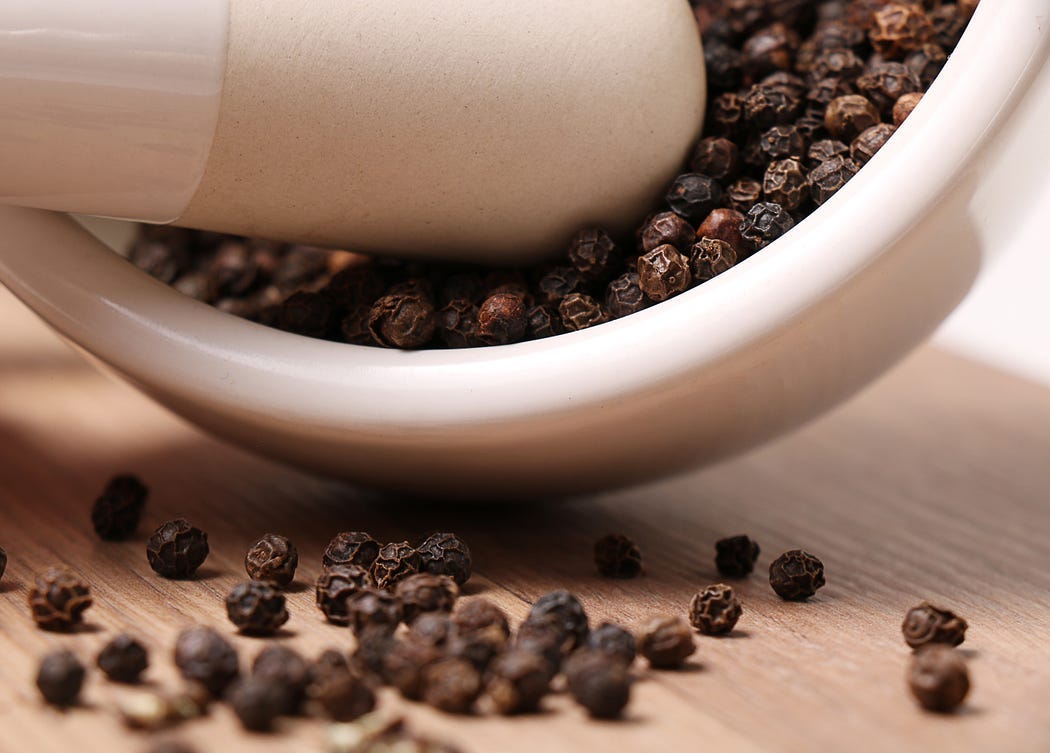
During this experimental phase, I think the black pepper was ultimately my favorite. I regularly made a drink that combined a few freshly smashed strawberries, lemon juice, black pepper syrup, and either gin or vodka. It was crazy tasty (I still remember the flavor even though it has been 5 or so years since I made it-just writing this is making me think I should make a batch of syrup and try out the cocktail once again.
Mixers
I wanted the mixers to be the shortcut for anyone who wanted a fancy drink but didn’t want to go through all the effort. This plus a spirit equals cocktail! I freely admit this is the least experimented with the product, but I did try out some of the flavors I was already playing with for bitters as a mixer. There was one that was more or less a tom yum soup (coconut milk, galangal, curry leaf, and lime leaf) that was very tasty. One of the elements I found here was that creating batches at scale was very difficult, particularly in getting the flavors consistent from batch to batch (this is something I’m sure every small food product company has toiled with). They were often also very mildly flavored (despite being infusions of incredibly flavorful items), making it hard to call any one of the mixers a successful idea.
Bringing in Friends
Right from the beginning, this was an idea I talked about a lot with friends. It was the first time I was really trying to play around with a physical product, so focus groups seemed like a requirement. And my friends who were designers offered up their services to make logo and label ideas. Adam created the original look, but then my friend Hevan Chan stepped in and played around with mockups of labels and other logo treatments.
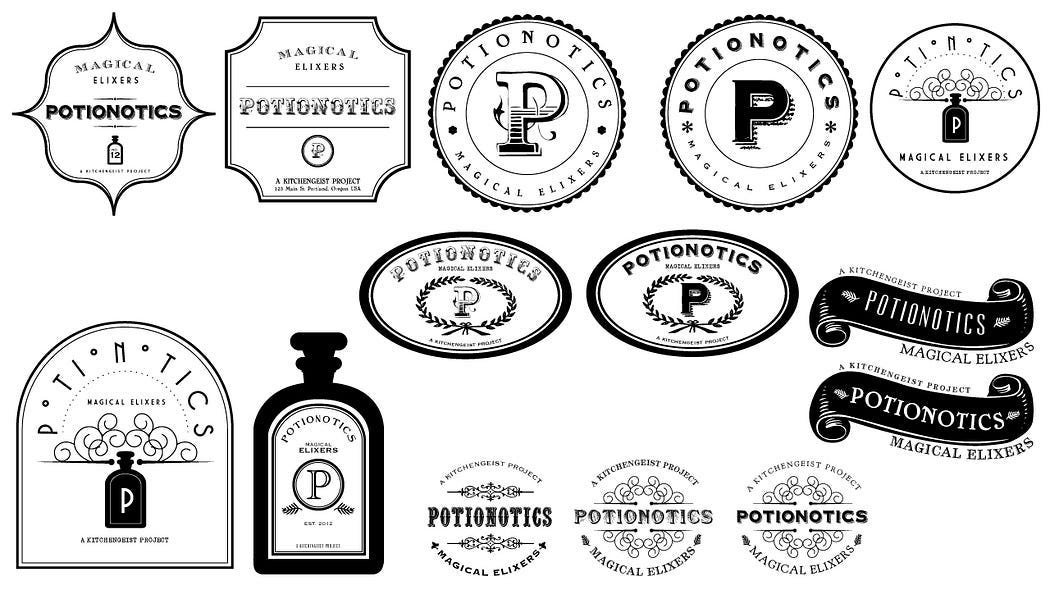
And here in Portland, I recruited my friend Ari Holzhauer to work on flavor ideas with me. Both Ari and I love food and cocktails and experimenting with flavors. So much so that we eventually started using the name Kitchengeist as a catch-all for the ideas we were playing with (Techgeist was the name of my tech consulting business I was running by this time — Kitchengeist seemed like the perfect food offshoot). But Kitchengeist is probably its own story worth a write up at some point, so I’ll leave that alone for now.
And then I never did anything with it
This title sort of says it all. Obviously I never launched a product or advanced the idea beyond some experiments and some very tasty drink sessions with friends. There is a myriad of reasons — this was a thing I did after work and on the weekend, we were new parents, other ideas would come up, etc. I ultimately came to realize that there were so many moving parts that unless I tried to raise money and do this for real, it would never be more than an idea. And so sadly at some point, I wrote it up in my notebook, and I stopped trying to figure out how to make it a reality. And I know you may be sensing a theme here, but like many of my other ideas, I REALLY liked this one. I felt like if I did have money behind it, you could make it happen. That said, lots of other people had the same idea about the cocktail space at the same time. Here in Portland, Bitter Housewife (and later Raft simple syrups)is the closest to the ideas I wanted to create. There syrups and bitters are delicious and have scratched the itch I had for fancy cocktails many times. Royal Rose Simple Syrups came out about the same time as well and are equally delicious. Seeing all the other brands pop up that felt like a similar idea made me feel a little bad about not developing my ideas more, but it also made me feel like the market might be saturated and that there just wasn’t a place for Potionotics anymore.
Don’t get me wrong, even the process of thinking about how to run this as a business was very useful. It made me realize the value of learning the logistics and operations sides of a small business. If I had had more time or energy, I might have enrolled in some small business classes to get a better grasp on that side of things. As it stands though, unless I hit the lottery, I suspect Potionotics is something you’ll have to come over to my house to experience.