The AI Bubble Isn’t Bursting This Year
But It’s Running Head-On Into the Power Grid
This essay was contributed by Stephanie Haycock , founder of Wonder Works Consulting. Advising organizations on product strategy and innovation across global content supply chains.
Everyone keeps asking whether the AI bubble will burst in 2026. It’s the wrong question.
Bubbles collapse when belief outruns reality. AI’s challenge isn’t belief—capital isn’t fleeing, users aren’t abandoning tools like ChatGPT, and large tech firms are still investing fiercely in infrastructure. What’s running up against a hard limit isn’t investor sentiment—it’s basic resources: electricity and the people who make that infrastructure work.
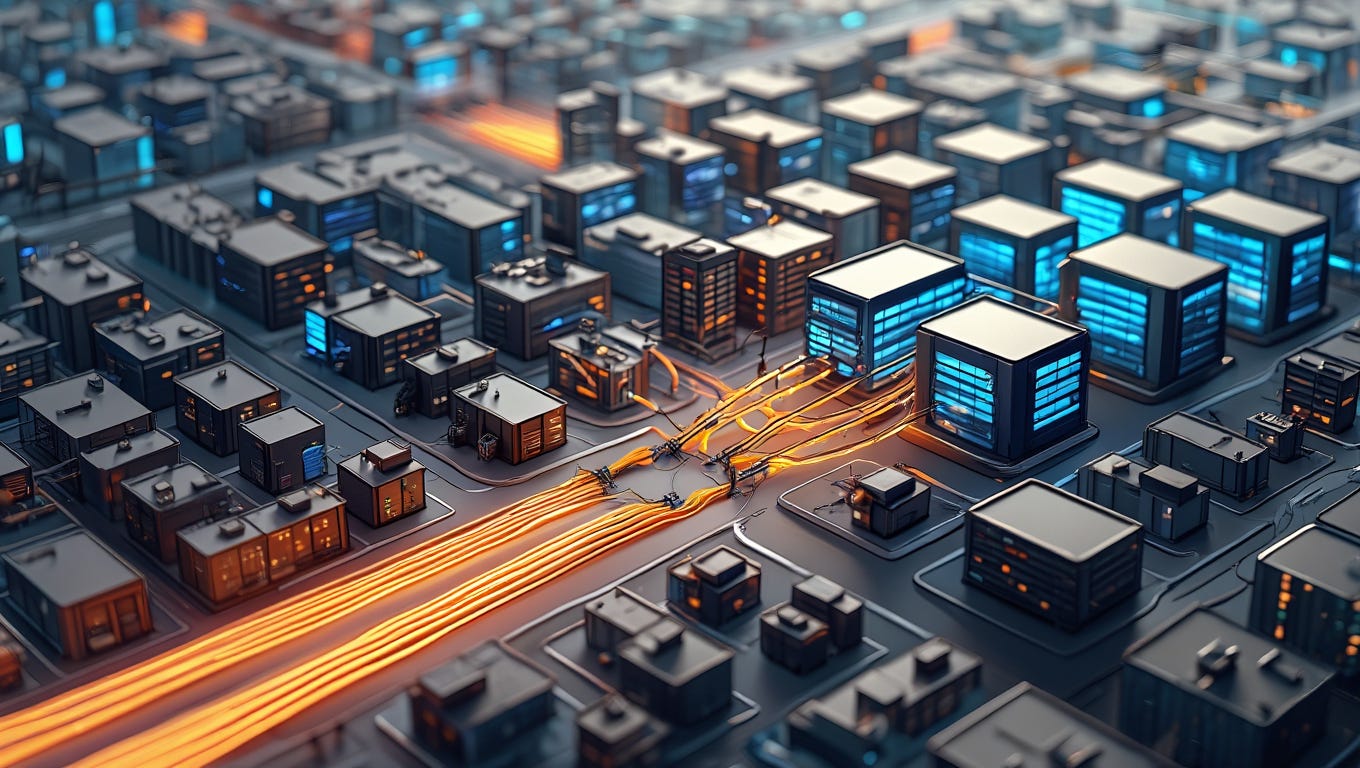
Servers don’t run on hype. They run on power, real estate, skilled labor, and access to a grid that can deliver both reliably and affordably. And increasingly, that power isn’t available where companies want it, when they want it, or at the price they assumed would always be there. If AI hits a wall in the next few years, it won’t look like the dot-com crash of 2000—no dramatic implosion or mass retreat. Instead, growth will slow, costs will rise, and progress will bottleneck around these very unglamorous constraints.
That’s a far more plausible story for 2026 than a classic bubble bursting.
AI Is Not a Bubble in the Classic Sense
Let’s be clear about one thing: AI doesn’t resemble the dot-com bubble in key structural ways. Many of the companies driving AI—Nvidia, Google, Microsoft, Meta—produce meaningful revenue and sustained demand for their products and services. The market isn’t exclusively powered by retail investors chasing memes; it’s reinforced by enterprise adoption, cloud infrastructure spending, and national strategic priorities. Firms like Nvidia continue to report strong earnings and long-term growth projections based on real demand for AI chips and services.
Industry analysts point out that the current surge of investment is fundamentally different from 1999 in that there are tangible economic drivers behind it. In other words, this isn’t just hype chasing itself; it’s demand feeding infrastructure. But infrastructure has limits.
Power Demand Isn’t Hypothetical — It’s Growing Fast
AI workloads require enormous computational power. All that compute needs electricity, and the facilities that host it—data centers—are big, permanent blocks of demand on the grid. According to the International Energy Agency, global electricity demand from data centers — much of it driven by AI — is projected to more than double by 2030 compared with today. The trajectory from 2022 to 2026 alone suggests a dramatic rise in energy use. In 2022, data centers worldwide consumed approximately 460 terawatt-hours (TWh) of electricity; by 2026, that is expected to exceed 1,000 TWh — roughly the annual electricity consumption of an entire industrialized nation like Japan.
In the United States, data centers already accounted for about 4 percent of total electricity use in 2024, and that share is expected to grow significantly by the end of this decade (Pew Research). Meanwhile, grid operators are projecting continued record high electricity demand overall in 2026 and 2027—not just from AI but from residential, commercial, and industrial sectors alike (Reuters). All of this paints a picture where electricity is a real capacity constraint, not an abstract future worry.
If you think of power like water flowing through pipes, you can only push so much through a given infrastructure before the pressure falls, leaks occur, or the system starts asking for reinforcements. That’s where many regions find themselves today.
The Grid Is Feeling the Strain
In parts of the U.S. and Europe, utilities are already raising red flags about the volume of electricity demanded by data centers. In some regions, data center power requests are leading to delays on new connections, protracted permitting processes, and strained transmission capacity. That means facilities get built—not powered.
With overall grid upgrade timelines measured in years or even decades, data center buildouts risk sitting idle waiting for the power to turn on. That’s not a stock market flash crash; that’s a practical, bricks-and-cables reality that delays projects, raises costs, and makes expansion more selective and regionalized.
And there’s a labor angle too.
The Hidden Talent War: Electricians and Plumbers
When most people picture the “AI talent war,” they imagine researchers, machine learning engineers, and star programmers. But a surprising front line in the AI infrastructure battle is the skilled trades. According to reporting from Wired, the construction boom driven by AI data centers has created unprecedented demand for electricians, plumbers, and HVAC technicians—specialized skills that are in critically short supply in the U.S. workforce.
The Bureau of Labor Statistics projects a shortage of roughly 81,000 electricians per year through 2034, and McKinsey estimates the U.S. will need hundreds of thousands more tradespeople to meet the demands of the data center boom. These aren’t optional extras; these are the workers who wire the power, install cooling systems, and connect infrastructure to the grid. Without them, projects can’t move from blueprint to reality.
Even when capital flows are ample and demand is unquestionable, a project can stall because there simply aren’t enough qualified people to build it on time. That’s an element of structural friction that doesn’t get talked about enough—and it’s grounded in demographics and workforce development, not stock prices.
Power Contracts and Strategic Responses
Tech companies aren’t blind to these constraints. Faced with grid limitations, some firms are proactively shaping the energy landscape around AI infrastructure.
Meta, for example, has launched a new internal initiative designed to build out computing and power supply in tandem, explicitly planning for tens of gigawatts—more over time—to feed its AI data centers (TechRadar). Similarly, OpenAI is investing in energy generation partnerships to ensure reliable supply for its facilities rather than depending solely on utility buildouts.
This matters because it signals a strategic pivot: scaling AI is now, to a significant degree, about securing electricity and workforce capacity, not just about coding faster models or raising bigger rounds.
What This Means for 2026 and Beyond
So if AI isn’t about to crash because of an investor panic in 2026, what will happen?
We might see a slowdown in expansion not because the technology failed, but because expanding it becomes more expensive and regionally concentrated. Costs for electricity may rise in some markets as data centers bid against residential and industrial users. Projects may get delayed not for lack of customers but for lack of grid capacity or skilled workers. Companies that secure long-term power arrangements and build local workforce pipelines will have an advantage.
That’s not collapse. It’s constraint—and in many ways, it’s a healthier reality check than the specter of a bubble burst.
Every major technological shift eventually hits infrastructure limits. Railroads needed steel and land; automobiles needed highways; electrification needed grids that actually reached people. AI isn’t exempt from these physical realities. The next dividing line won’t just be who has the best model weights. It will be who can secure a reliable flow of electrons and the people to make the infrastructure work.
AI won’t disappear. But its growth will increasingly be shaped by the same kinds of constraints that have governed industrial revolutions for centuries. And unlike bubbles, which metaphorically pop, constraints force realignment—they decide who gets to scale and how.
In 2026, don’t watch for a crash. Watch where the lights stay on.


