

An animator at a studio does not own her drawings. The studio does, under the same rules that have governed studio work for a century. What the studio never owned was her ability to make the next drawing. When the next film came along, getting more drawings still required skilled artists, so her ability to produce new work kept finding buyers.
AI training starts to change that. A studio can train a model on drawings it already owns and use that model to do part of the next round without her. Her wages were never negotiated to compensate her separately for that use. If yesterday’s work is going to become part of tomorrow’s production capacity, the people who made it need a continuing share of the value it keeps generating, and that share has to be bargained for.
This piece started in the comments. When I shared “Two Cents” on LinkedIn a few weeks ago, Yves Bergquist asked two fair questions. Shouldn’t the company that pays for the work own it, and can’t creatives simply negotiate or walk away? The answer to the first is yes, and nothing here depends on changing it. The second deserved a longer answer than a comment allows.
The loop that kept skill paid
Under the work-made-for-hire rule, the employer is the legal author of what an employee makes on the job. Studios own the drawings, scripts and designs their staff produce. That arrangement never promised anyone steady work, and animation has been through decades of layoffs and outsourcing. What it left intact was a market. Owning a finished drawing didn’t eliminate the need for skilled labor to produce the next one, so future production kept creating demand for the skill behind past production.
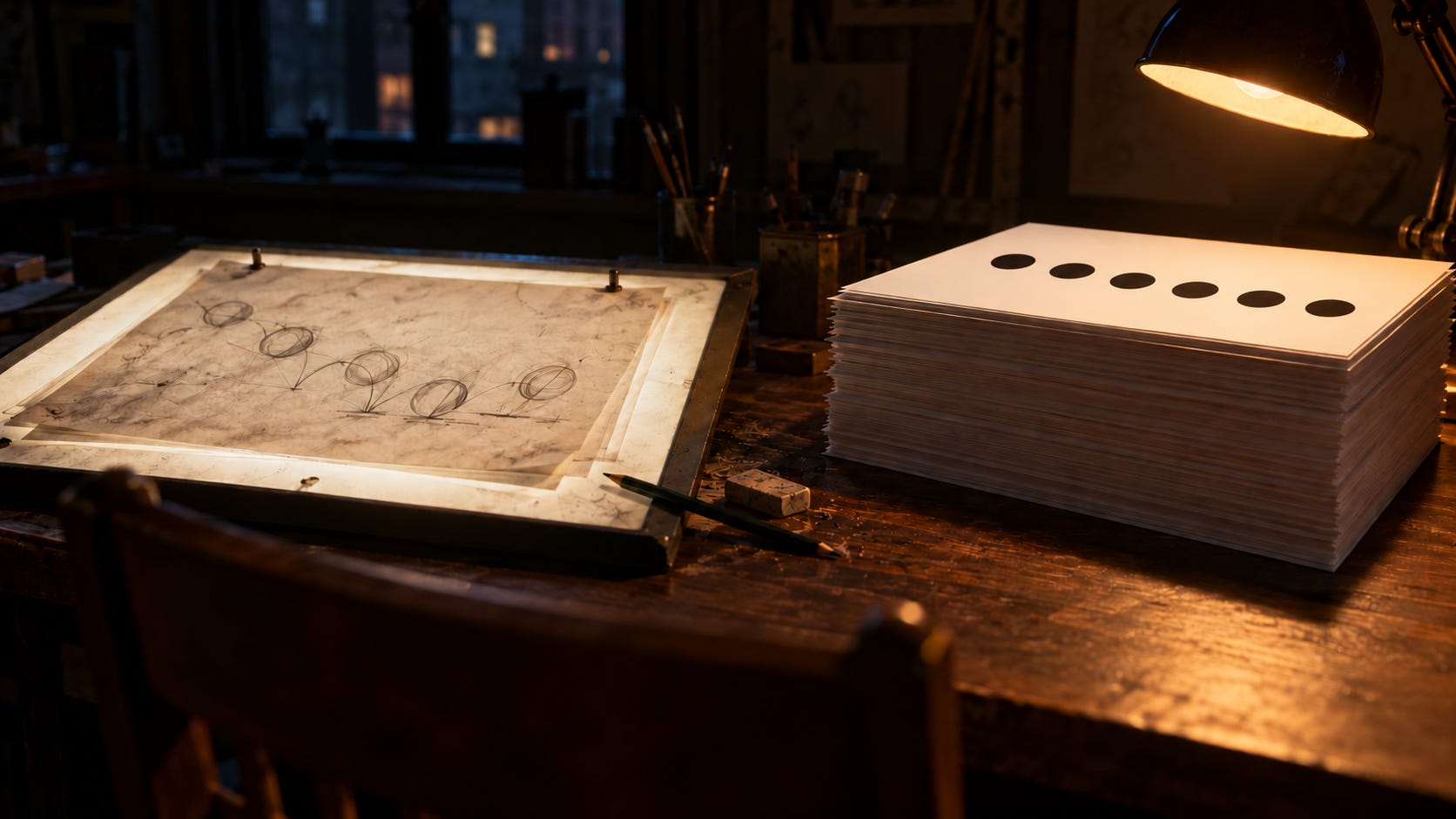
There is an old line freelancers use when a client balks at a bill. You aren’t paying for the ten minutes it took me, you’re paying for the twenty years it took me to learn to do it in ten. Staff animators are paid differently, by the hour or the week under a union scale, but the line names something every working professional relies on. The twenty years hold their value because the next job needs them again. Whether expertise is priced into a freelance fee or into a career of wages, it gets paid for as long as there is new work that only the expert can do.
What training adds
Training changes what finished work is good for. A drawing used to be an end product. In a training set it becomes an input to a system that can perform some of the tasks the next drawing would have required. The ten minutes leave the building with part of the twenty years attached.
I’m not claiming a model absorbs a particular artist’s judgment, or that it replaces a senior animator. The narrower claim is enough. A model only has to reproduce enough of the results of expertise to shrink the market for some of it. Existing wages and fees were negotiated without any price for turning completed creative work into a system that can do future creative work. That use is new and valuable, and the workers whose drawings made it possible receive no additional compensation for it.
Why “just negotiate” doesn’t fix it
Yves’s second question deserves a direct answer. Contracts price uncertain future uses all the time, through royalties, contingent compensation and revenue shares. The problem is who is doing the negotiating. An individual animator has little leverage to demand those terms, little information to value them, and no way to audit how the studio uses her work afterward. She also can’t refuse the use without refusing the job. That is why the gains creatives have made on reuse have come from unions bargaining together.
Both guilds have won meaningful AI protections. The Animation Guild’s 2024 agreement lets an animator refuse a scan of her face or voice without losing the job, requires notice before a producer mandates AI use, and offers consultation on request. It grants no matching say over training on her studio-owned drawings, and an arbitrator hearing a claim under its AI provisions cannot order the use stopped. The Writers Guild went into its 2026 talks asking for payment and came out with something narrower. Companies must notify the guild when they license covered work for compensation to an unaffiliated third party to train a publicly available commercial AI system. The guild can then request a discussion of the license, including compensation for writers. Internal training falls outside that notice requirement.
The gap follows from ownership. Under work for hire, the studio already owns the drawings, and the artist has no separate copyright right to approve their use for internal training. If that use is going to trigger additional compensation, the obligation has to be established through collective bargaining, because the studio needs no license from her to make it.
What residuals were for
Residuals let workers share in value realized after their employment ended, from uses nobody priced when they were hired. In 1960 the Screen Actors Guild struck over films sold to television. The settlement set residuals for films made from 1960 on, and the guild gave up claims on films made between 1948 and 1960 in exchange for producer money for a pension and health plan. The back catalog went to the studios. A great deal of work has already been used to train models, and a training deal struck now will likely cover only what comes next.
How the money moves matters as much as whether it exists. When musicians won a payment on recordings in 1944, after refusing to record for more than twenty-seven months, it went to a fund that hired musicians for free public concerts. The recording musicians received no direct payment tied to their recordings. A pooled payment can still work. Given how hard it is to trace one drawing’s contribution to a model, a fund tied to covered employment may be the most practical design. The test is whether the money returns to the people whose work built the capacity.
Paying for the new capacity
The next bargain doesn’t have to trace every generated image back to the drawings behind it. Residuals have never required that kind of precision. A bargain has to name the new use, put a price on it, and say who receives the money. Three events are worth naming. A studio that licenses its archive for training can share the receipts. A studio that trains or fine-tunes its own production model can pay a negotiated fee or fund contribution. A studio that puts that model into commercial use can make periodic payments tied to that activity. The formulas are for the bargaining table. What matters is that the obligation exists, that the accounting can be audited, and that the money reaches the people who did the work.
This reaches well past animation. We are moving quickly toward a world where much of what people know gets sold online as finished work, a design file, a block of code, a recorded session, a written answer. Each of those can feed a system that keeps doing part of that person’s job after the engagement ends. The ten-minutes-and-twenty-years line needs a new method behind it. When expertise keeps working, the person behind it needs a way to keep getting paid, more than once and on terms they can see and enforce.
The Animation Guild has the next concrete chance to set that principle. Its agreement runs through July 31, 2027, and either side can serve notice to renegotiate by May 1 of that year. Studios own yesterday’s drawings. The question for the next contract is whether that ownership also buys the productive capacity of tomorrow’s workforce, without another payment to the people who built it.