

If you’ve been following my writing or work, you know that for a long time, my career revolved around a big role at a big company, shaping strategy and innovation in media and AI. But over time, I realized that focusing on one big thing often meant having less control over where I invested my time and energy.
Now, I’m embracing a mix of smaller, more meaningful projects—which, paradoxically, might keep me even busier. The upside? Less travel, more time with my family, and the freedom to focus entirely on work I truly believe in.
Right now, that looks like:
Advising
Even while I was at Microsoft, I advised a few companies—either friends in the industry or businesses that found me through my work. Now, I’ve expanded that, taking on new advisory roles with companies like Modtech Labs, SlinkIt, and more. I’ll be sharing updates on these businesses and how I’m helping them grow in future posts.
Writing
Obviously, if you’re reading this, you’ve noticed I’ve ramped up my writing. I’m really enjoying flexing these muscles again—especially since, unlike before, I can now write exactly what I want, without corporate constraints. This Substack will be my primary writing space for now, though I still have a few book ideas I’m holding onto.
Speaking
Leaving Microsoft doesn’t mean I’m stepping away from the stage. I’m already locked in for NAB and several other conferences, and I’m finalizing talks and presentations as we speak. If there’s an event discussing AI + Media Technology, there’s a good chance I’ll be there.
Podcasts
For years, people have asked me why I don’t have a regular podcast. The honest answer? The idea of an open-ended podcast with no clear direction always felt daunting. But I do miss the conversations I had with Simon on Media Minutes and wanted a way to extend my speaking engagements beyond just live events.
So, I’m working on a podcast plan with Doug Daulton, in partnership with SMPTE (Society of Motion Picture & Television Engineers). More details soon! In the meantime, I’ll also be guesting on friends’ podcasts, so expect updates when those go live.
Each of these pieces is distinct, but together, they form something balanced—kind of like a well-made cocktail.
Speaking of, I promised I’d share cocktail content from time to time, so let’s talk about one of my favorites.
The Vieux Carré: A Blend as Iconic as New Orleans Itself
With Mardi Gras recently wrapping up, it’s the perfect time to talk about a cocktail that embodies the spirit of New Orleans. While I haven’t been to Mardi Gras since my college days, I love any excuse to pay homage to the city and its cocktail culture.
New Orleans has always been a melting pot—a blend of French, Spanish, African, and Caribbean influences. That mix is reflected in its food, music, and, of course, its cocktails.
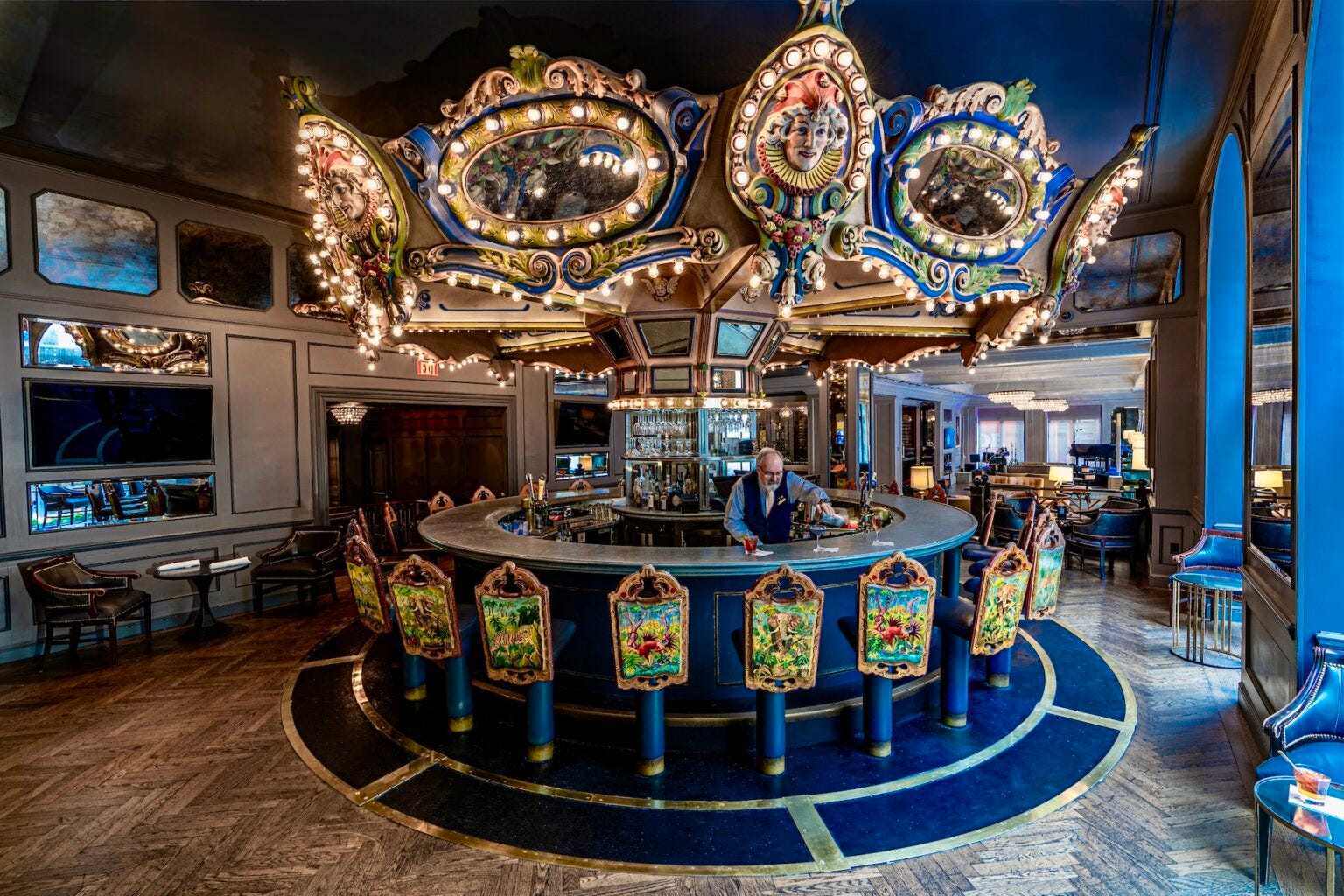
The Vieux Carré (pronounced voh car-ray) was created in the 1930s at the amazing Carousel Bar in the Hotel Monteleone, one of the city’s legendary watering holes. Bartender Walter “Grasshopper” Bergeron wanted to craft a drink that captured New Orleans itself—a mix of refinement, boldness, history, and unpredictability.
At its core, the Vieux Carré is a riff on a Manhattan, but with some key differences:
It’s a split-base cocktail (more on that in a moment).
It includes an herbal liqueur (Bénédictine) to add depth.
It’s served over ice, not up, making it a slow-sipping drink that evolves as it sits in the glass.
Split-Base Cocktails: Two Spirits Are Better Than One
A split-base cocktail uses multiple base spirits (instead of just one) to create complexity and balance. The Vieux Carré does this beautifully by combining rye whiskey and cognac, each bringing something unique:
Rye whiskey (American influence) → Spicy, dry, structured
Cognac (French influence) → Smooth, rich, subtly fruity
Why use a split base?
Layered Flavor – Instead of one dominant note, you get a more nuanced and harmonious mix of flavors.
Bridging Traditions – Rye represents American whiskey culture, while cognac ties the drink back to New Orleans’ French heritage.
Balance & Complexity – Rye can be too sharp on its own, but cognac rounds it out. Cognac can be too soft, but rye adds backbone.
This approach makes the Vieux Carré richer and more interesting than a standard whiskey cocktail.


The Recipe
Ingredients
¾ oz Rye Whiskey (I’m using Uncle Nearest)
¾ oz Cognac (I found a bottle of Ferrand, which I love)
¾ oz Sweet Vermouth (I’m using a local one called Accompani from Straightaway Cocktails)
¼ oz Bénédictine
2 dashes Peychaud’s Bitters (or Creole bitters)
2 dashes Angostura Bitters
Lemon twist for garnish
Instructions
Add all ingredients to a mixing glass with ice and stir until well-chilled.
Strain into a rocks glass over a large ice cube.
Express a lemon twist over the drink and drop it in.
The result? A slow-sipping, beautifully balanced cocktail that evolves as it sits in the glass. The herbal depth of Bénédictine, the bitters’ spice, and the richness of the vermouth all work together—just like the elements of my career right now.
Try It & Let Me Know
If you’ve never had a Vieux Carré, order one the next time you go out. Or, if you like mixing drinks at home, pick up the ingredients and give it a shot. The great thing about these ingredients is that they show up in a variety of classic cocktails, making them excellent choices to keep stocked.
What’s your go-to drink when you want to slow down and savor the moment? Drop a comment and let me know.
Cheers!
Love this! Reminds me of the Lambeth Walk Fizz cocktail recipe I adapted from James Beard winning bar Maison Premiere for easy home mixing!
It’s a decadent ode to New Orleans culture, giving the creamy Ramos Gin Fizz a tropical, Willy Wonka-esque spin.
check it out:
https://thesecretingredient.substack.com/p/get-james-beard-winner-maison-premieres
Manhattan is my go-to. Boulevardier when I'm feeling frisky. Vieux Carré when I feel like I deserve something special. Yummy.