

Lenders now trust music catalogs enough to lend against them, while the record of what the artists and actors inside that work have agreed to still lives in settings, ballots and one-project contracts. This week Carlyle led a $450 million bond backed by music royalties. The same week, Spotify gave every artist a way to keep fake songs off their page, as long as the artist turns it on. And UK actors won the right to approve and be paid for their digital doubles, in a deal that leaves AI training without an explicit contract term.
These are three separate stories. A royalty bond, a streaming dashboard and a union contract sit in different parts of the business, with different parties and different law, and none of them caused the others. What connects them is the order in which things are getting built. The industry has increasingly reliable ways to identify and finance creative assets. Its ways of establishing what the people connected to those assets have authorized are more fragmented, and they get thinnest when a new use arrives.
Carlyle leads a $450 million bond backed by music royalties
Source: FT, November 17, 2026
Duetti, the music rights company backed by Jay-Z’s Roc Nation, raised $665 million to keep buying catalogs, anchored by a $450 million asset-backed securitization led by Carlyle and filled out with credit facilities from Viola Credit, Flexpoint Ford and Truist Bank. Duetti already holds work from more than 3,000 artists in over 50 countries. CEO Lior Tibon told the FT this is the company’s third securitization in two years and more than five times the size of its first, in 2024, and credited streaming data and the company’s track record with getting institutional investors comfortable with music catalogs.
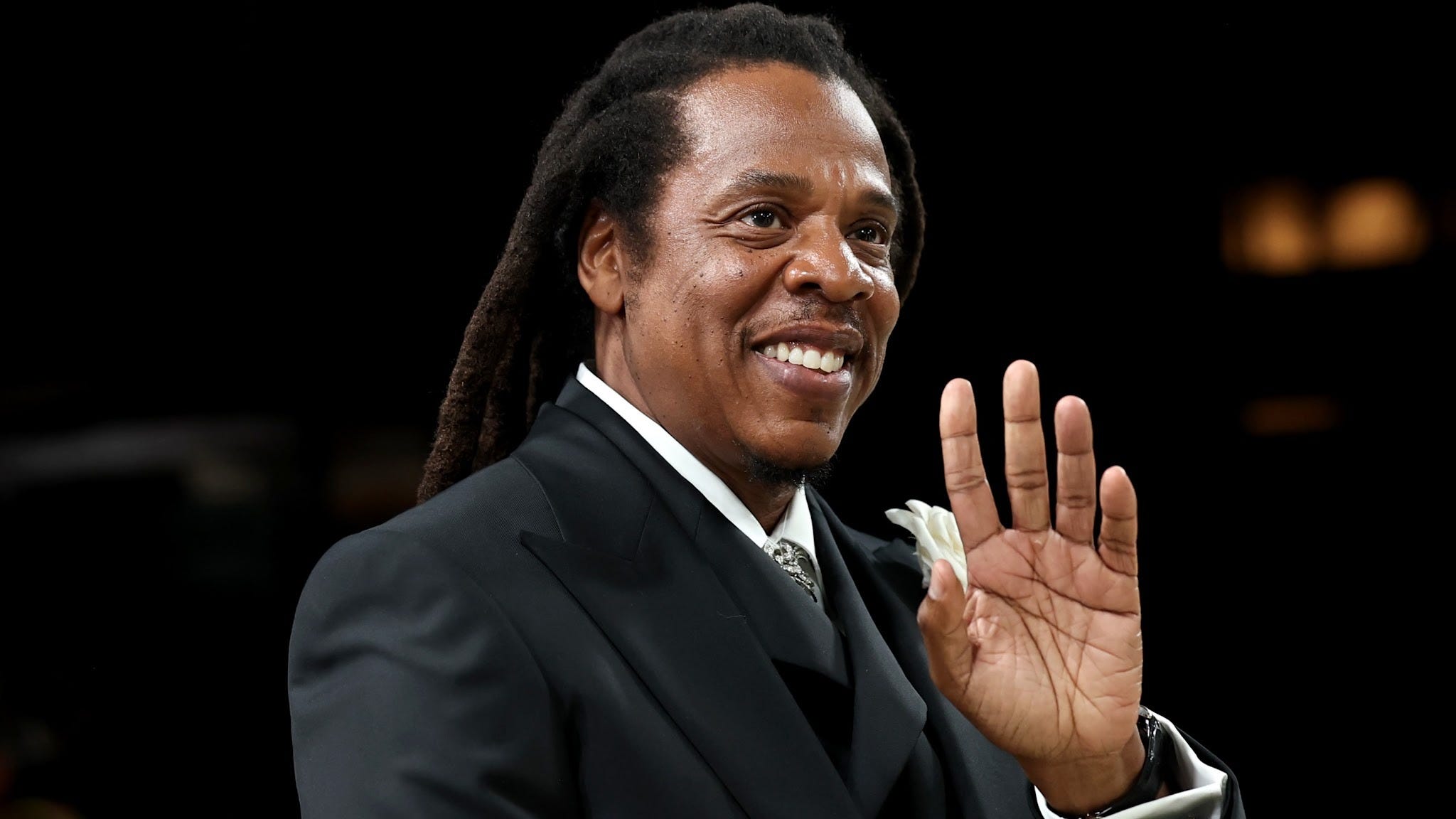
Image: via FT
Why it matters
Royalty bonds are not new. The rating agency KBRA says it has rated about $12.9 billion of music royalty bonds since 2020. What Duetti shows is scale and repeatability, with an independent-catalog buyer going back to the market a third time at five times the size. Streaming turned a song into payments that can be counted month by month, and payments that can be counted can be lent against. My read is that investors are starting to price rights like infrastructure, the way they price a toll road or a tower lease. By Tibon’s own account, the data on how the songs earn is what made them bankable.
That is the asset side working well. It also shows what a bond needs to see. A securitization can be priced on a predictable royalty stream without anyone producing a shared, readable record of which future uses the people on those recordings have authorized. The question of what a song may become next sits somewhere else.
Spotify gives every artist name protection, if they switch it on
Source: TechCrunch, November 17, 2026
Spotify is rolling out Artist Profile Protection to all artists after eight months of testing. An artist who turns it on through Spotify for Artists gets an alert when new music is submitted under their name and can remove their association with any release that isn’t theirs. Releases still go live on schedule unless the artist steps in. Spotify’s own support page describes a stronger Block releases setting, where nothing lists the artist without approval, and says that setting is still being tested with a limited group. Under Block, an artist can hand trusted distributors an artist key so legitimate releases go live pre-approved. The backdrop is scale. TechCrunch notes Billboard’s report last month that Sony Music had asked platforms to remove more than 260,000 deepfake songs, nearly double the figure the label gave in March.
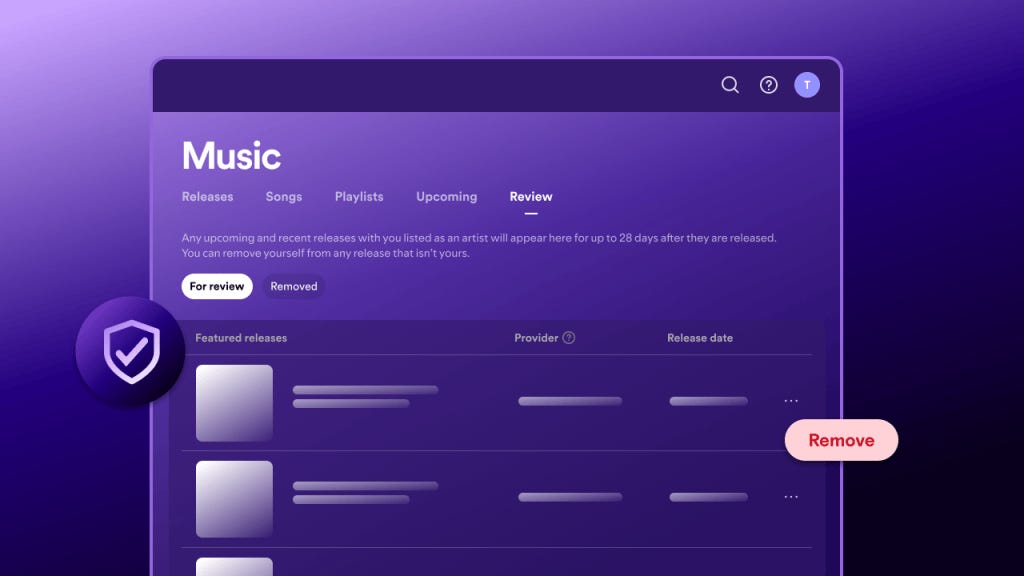
Image: Spotify, via TechCrunch
Why it matters
The fix is real, and the default runs the other way. An artist has to know the tool exists and turn it on, and even then a fake goes live unless the artist catches it, one release at a time. I would want the approval setting on by default and open to everyone.
The artist key is the most interesting part, and it is easy to miss. It is an authorization that crosses a company boundary. The artist tells Spotify in advance which distributors may speak for them, and a release carrying that key is treated as approved. That is a small, working version of the thing this industry keeps saying it lacks. It is also limited to one storefront, one kind of decision and, for now, a test group. The industry does have identifiers for people, unevenly adopted. As I wrote in Identity as Infrastructure, what it never built for people was the kind of shared registry it built for assets fifteen years ago. Knowing which person an identifier points to is still a different question from knowing what that person has authorized, and Spotify’s key answers the second question for exactly one use.
UK actors win consent over their digital doubles, with training left out
Source: The Guardian, November 17, 2026
Equity, the UK actors’ union, has signed a three-year deal with the producers’ body Pact that gives performers the right to be paid when their digital replica is used and to consent to whether it is used at all. Consent is per project, so producers can no longer get blanket permission for an actor’s replica. Producers may not use a replica during a strike where consent would otherwise be required, and must limit who can access replicas and protect them. The deal also raises pay 24% for major films and 9% for TV, and goes to a vote of 8,000 members with the union’s leadership recommending a yes. Equity told members that, despite its efforts, the agreement does not set explicit contract protections for the use of performances to train AI. It also explained that a replica can be made from the photography shot for the production itself, with no scan needed.

Image: EvgeniyShkolenko/Getty Images/iStockphoto, via The Guardian
Why it matters
Project-by-project consent is a real win. A yes for one production no longer stretches to the next one, which is exactly the limit Equity set out to get. The contract governs the finished double. Training is where it goes quiet, and that silence is not the same as permission. Equity has argued for over a year that companies are using performers’ work without authorization, in breach of existing copyright and data protection rules, and has helped members file data requests to find out what companies hold. In the same report, Pact’s deputy chief executive said foundation models had been trained without permission on his members’ films.
So the training question is unresolved, sitting between a contract that does not address it and a body of law whose reach on training is still being argued. I think consent matters more than the check, because a fee for work already taken leaves the person no say. The Equity deal settles consent for the output. The input still depends on who wins the legal argument.
Where the control sits
Three kinds of record moved this week, and they are at different stages. The financial record for music is mature enough to support repeat bond issuance. The identity record at Spotify can now tell an artist that something new arrived under their name, and for a test group it can carry a pre-approval from the artist to a distributor. The consent record for actors is now written into a union contract, one production at a time. These records do not talk to each other. All three carry money, through royalties, replica fees and pay, but only the financial record is built to be packaged and sold as a bond.
What should travel with a work is the record of each decision, with its limits attached. A yes for one film, one territory or one term should be readable downstream as exactly that, and it should never widen into a yes for everything. Today that record is scattered across a lender’s data room, a streaming dashboard and a production contract. In The Switch Moved Again I argued that whoever builds the permission record, and gets buyers to trust it, holds the next point of control in this business. This week the buyers arrived first.
Closing note
The Equity ballot closes on November 30. Watch whether members accept a deal that leaves training out, and whether either side says how the training question gets picked up next, whether through the next contract round, a test case or the data requests Equity has been filing. Watch whether Spotify moves Block releases and the artist key from a test group to every artist, because that would put a working pre-approval at the scale of the whole platform. And watch the next catalog financing for any sign that lenders start asking what uses beyond the original contracts have been authorized, since that would mean the money side had started asking the consent question on its own.
If you hold a catalog, the useful exercise is the one lenders already run for revenue. Know, title by title, which uses the people in that work have agreed to beyond the original contract, what the limits of each agreement are, and where that agreement is written down. You do not need an industry-wide permission system to do this, and you will want it done before a buyer, a model company or a performer’s lawyer asks. The money already has that record. The consent needs one too.
I build and advise companies working on rights, provenance and media infrastructure.